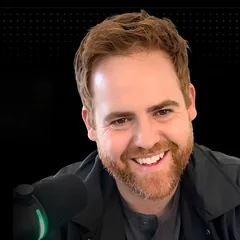
Vlad Sarca: From a €15M Market Operator to a €30M VC
Key points: Said at the table.
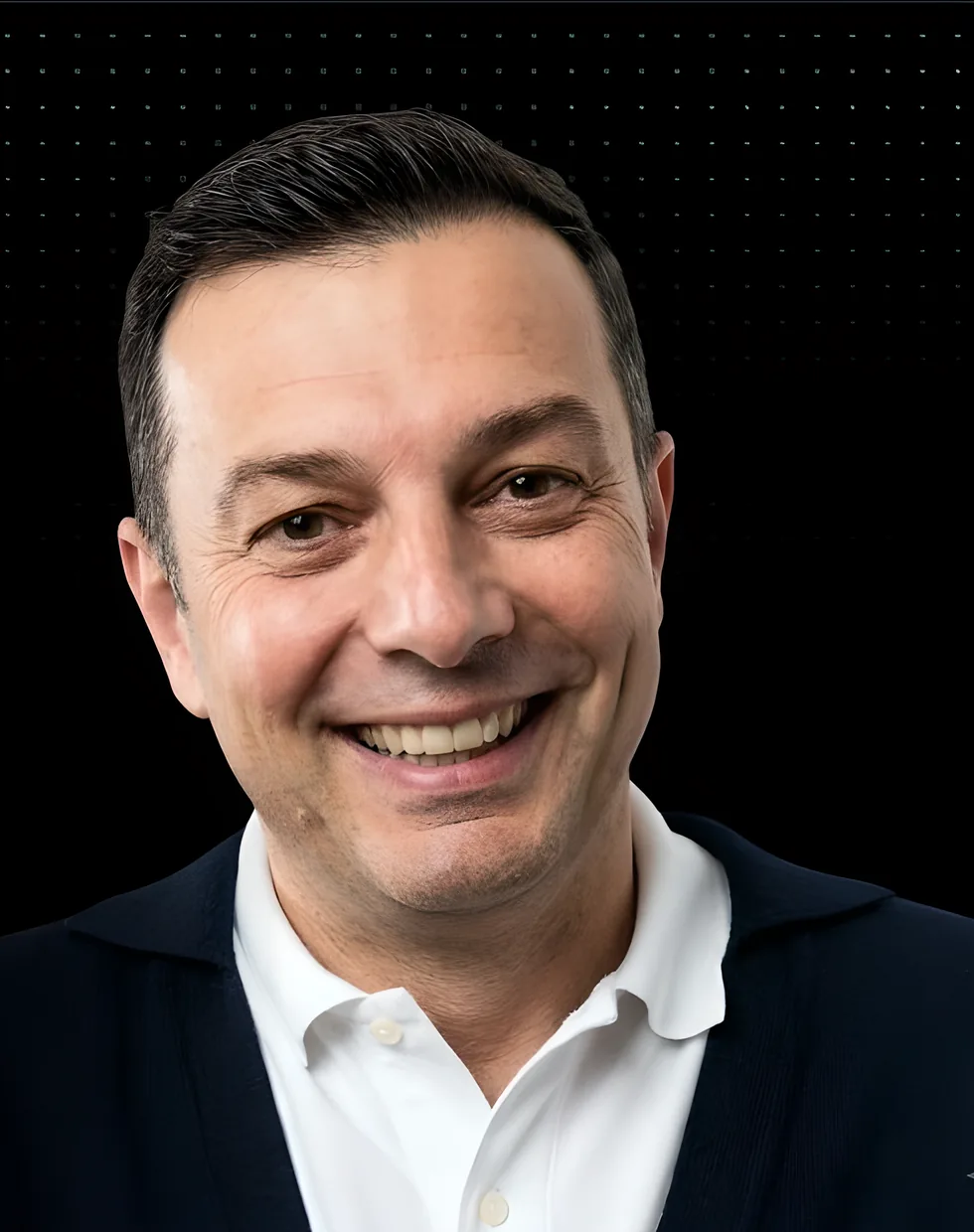
Who is Vlad Sarca?
Vlad Sarca is a partner at Sparking Capital, a venture fund in Bucharest that backs early stage tech companies. He calls himself an operator who still counts as an entrepreneur: he built a tech company, sold it after 11 years and then joined Sparking's team a few months after its first fund launched.
- 11years he spent building his tech company before he sold it4:09
- 2018the year he sold it, before moving to the investor side4:09
- €30Min the fund he invests from, spread over about 24 companies11:05
- After university
Builds a tech enablement company, in about 15 markets as he remembers it
3:47 - 2018
Sells the company after 11 years
4:09 - After the sale
Invests as an angel and takes a venture capital course at a business school in Madrid
5:06 - Sparking
Joins the team a few months after the first fund launches
5:28 - Today
Partner at Sparking Capital, backing early stage tech companies
0:00
What Does a Venture Capitalist Do? A Partner on Decks, Founders and Funds
What does a venture capitalist do? Vlad Sarca, General Partner at Sparking Capital in Bucharest, reads two or three pitch decks a day, maybe more, can meet the founders his fund backs every second week or once a month, and helps raise the money the fund invests.
The fund holds €30 million, spread over about 24 companies at pre-seed and seed, the earliest funding rounds, mainly in B2B. Host Niclas Schlopsna opens by asking him about the last pitch that made him stop scrolling.
What does a VC do day to day?
Asked how many pitch decks he reads in a month, Vlad answers two or three a day, maybe more. Two more parts of the job come up in the conversation:
- Meeting people. He allocates time every week to meet people and goes to events where he meets more of them at once. Niclas does the same and picks events carefully, since meeting in person builds a different connection.
- Referring deals. He refers deals to other VCs, and they refer deals to him. In February Sparking invested in a Czech company that a fellow VC had referred.
Which kinds of venture capitalists are there, and do they compete?
Vlad sees three types of investors: operators (people who have run businesses), consultants, and technical people or people from corporations, whose backgrounds can also support startups.
In his view operators understand founders better because they've been through a lot and know when it is tough. Other types can too if they are empathetic, he adds, but they haven't been through it themselves.
Niclas opens with stories he has heard from VC friends, such as an investor who flew to a founder with champagne to pitch overnight. Vlad calls fellow VCs both partners and competitors, mostly partners. Some competition is absolutely fine with him, he says, as long as it stays healthy and does what is best for the company.
How do venture capitalists work with founders after the investment?
Spread over about 24 companies, the fund makes eight or nine investments per partner, so from the start the partners chose to be hands-on and to dedicate time, which means they can meet founders maybe every second week or once a month.
“I wouldn't like to be an investor that meets the founder every quarter. I think this wouldn't be enough.”
How does a VC support founders at pre-seed?
Vlad says VCs like him are company builders. The fund works in early stage venture capital, and the founders it meets are often technical and may have no sales team, with founder-led sales at the start, where the founders sell the product themselves. It helps them find people for sales and marketing or supports them directly.
How to become a venture capitalist: one operator's route
Vlad came into venture capital from running his own company. He calls himself an operator who still counts as an entrepreneur, now in early stage venture capital. He had long wanted to be an angel investor and remembers going to the Pioneers Festival in Vienna in 2011 or 2012, when the Romanian startup scene was still very early.
- Step 1: Build a tech company
A tech enablement company in about 15 markets as he remembers it, started right after university. Germany was one of the biggest.
3:47 - Step 3: Try angel investing
With more time after the sale he invested in some companies, but none of the opportunities he saw seemed relevant and he lacked deal flow, the stream of investment opportunities that reach an investor.
4:46 - Step 4: Study the field
He took a course in venture capital and angel investing at a business school in Madrid.
5:06 - Step 5: Meet the partners
While doing this he met the partners who were setting up Sparking's first fund.
5:18 - Step 6: Join the fund
He joined a few months after it launched. As he remembers, it was the fourth or fifth VC fund in Romania.
5:27
Vlad Sarca on Deal Makers (& Fakers), 3:47 to 5:43
How does angel investing work as a first step?
Vlad found his deal flow by joining angel associations: first the biggest one in Romania, which had about 20 members then and, he thinks, about 200 or more now, and then the Transylvania Angel Network.
Vlad Sarca on Deal Makers (& Fakers), at 6:40
He also used crowdfunding platforms, among them a Romanian one where tickets are larger: you cannot put in a 100 euro ticket there, but a few 10K, 20K or more, which, he says, makes you an angel investor, just not a very small crowdfunding commitment.
Niclas is skeptical of crowdfunding. For those investors an exit is far away, and he wonders whether big VC names would still back a company with many crowdfunding investors on its cap table, the list of who owns what share, held through an SPV, one vehicle that holds all their shares.
Vlad sees advantages and disadvantages. Some platforms take just a few hundred euro a ticket, which founders should know. Others work like an angel syndicate, a group of angels investing together in one deal, and there he sees no problem as long as it doesn't break the cap table, a matter of a few percent.
Andy Goldstein made 55 angel investments before he sat in a VC fund's partner meetings through Venture University, and says it made him realize he had not been managing his portfolio in a way that helped the companies exit.
What does a venture capitalist do to raise a fund?
Raising the new fund took more than a year, and the macroeconomic environment made it harder, Vlad says.
The investors in the fund, the LPs (limited partners, who supply the money), include several institutional investors, family offices and high-net-worth individuals, the last group wanting to diversify their portfolio. Many are from the region the fund works in, Central and Eastern Europe (CEE), others from Germany and the Middle East, and many also invested in Fund 1, which he says helps a lot.
“We all do fundraising. So we are three partners, like I said, and we all do fundraising.”
The partners start with the investors from Fund 1 and personal connections and then move to institutional investors found through different channels. In CEE it is quite tough, Vlad says, and he sets it against the big hubs further down.
The new fund is backed by the European Investment Fund, which Vlad calls the biggest investor in Europe. The money comes with a strategy: the fund is constrained to tech and IT startups, and part of it must go to Romanian startups. Only a few managers, three if he is not mistaken, have accessed funds from it.
Within tech, Sparking is looking at cybersecurity, where it hasn't invested yet, and invests Europe wide. It will not invest in defense startups, Vlad says, because they are not in line with its investment strategy.
Andreas Schmidt, who runs an angel network and a VC firm, says that as a founder he always thought VCs have money, and learned that VCs also have to fundraise.
What is venture capital in Europe like outside the big hubs?
Vlad sets the big hubs of venture capital in Europe against his own region, where the pool of investors is much smaller.
- Pool of investorsGermany, UK, France, Sweden: The big ecosystems in EuropeCentral and Eastern Europe: A much smaller pool that really invests
- Capital and exitsGermany, UK, France, Sweden: Very many exited founders and a lot of capitalCentral and Eastern Europe: Quite tough: very few American investors invest, and Western European investors are less likely to
Vlad Sarca on Deal Makers (& Fakers), 16:42 to 17:18
He still sees a case for the region. He points to a price arbitrage: several statistics, which he does not name, show that companies there build more with the same money, because prices are lower.
He names UiPath as a success story and says Romania has proven tech talent and one of the fastest internet connections in the world. The first VC fund launch in Romania was in 2013, he says, and 2018 and 2019, when Sparking launched, were years with more activity.
Niclas asks whether it bothers him that some Romanian companies move their headquarters to Delaware or London. It does not, Vlad says: it is the nature of the game, though it would be better if Romania and other EU countries had laws similar to those in Delaware and the UK. He calls the EU Inc. initiative a good one.
Niclas agrees it is a nice direction but is sometimes a little concerned that the exit potential in Europe is still not good enough, because Europe does not have very big companies or pension funds in the volume the US has.
Romania has about 20 million inhabitants and an economy of roughly €400 billion in GDP a year. Vlad calls that size a curse: next to its neighbors Romania can look big, and many founders, in his words, waste a bit of time developing in the Romanian market. Founders have to think from the beginning about scaling internationally, he says, like Estonian or Israeli founders.
“We might think we're quite big, but the world is just not big enough, and the market is not big enough.”
What does a venture capitalist do when a founder shows a red flag?
In a first meeting Vlad often has a feeling that a founder won't close the round: the founder isn't well prepared, has no good estimates about the market or doesn't know what the customer wants. Niclas's questions bring out three more cases:
- A broken cap table. A non-founder, or a former founder, who still owns 20 to 30 percent isn't okay for him, and neither is a mentor professor who will never leave academia but holds quite many shares. He might talk to the founders and explain the problem.
- A family team. Niclas describes a team with the son as CEO, the sister as COO and the father as external advisor. Vlad can't judge on family relationships alone: if the parents run the business and the children are quite inexperienced, it is a red flag, while siblings of 30 or 40 who get along are a strong connection.
- Founders who can't be coached. Sparking has never pulled out of a deal after a term sheet, the document that sets the main terms of an investment. It has pulled out while negotiating one, because the founders weren't coachable: some assume the investor comes with bad intentions, yet investors have rules to respect and need a certain level of control even with 10 or 15 percent equity.
“Uncoachable founders is always a red flag for us.”
What does a venture capitalist do with a pitch, and how should founders approach one?
The pitch that last made Vlad stop scrolling ended in an investment: Pluria, announced two days before the recording, with founders he had known for some years. They were very well prepared, one is a serial entrepreneur with a significant exit, and the company has some traction. With a credible plan and a big market, it was not a hard decision for the fund, he says.
Asked which buzzword he sees most often in pitch decks, Vlad says AI: for the last few years it has shown up even where the main product was not about AI.
On how to approach a VC he doesn't know, Vlad says it's fine to send a well-prepared deck or to get a warm intro from someone. For the warm-intro route, a guide on how to get warm introductions to investors covers timing and email templates.
Vlad also asks founders to research the process, be realistic in their assumptions and not exaggerate traction or future traction.
“It's good to be bold, it's good to be ambitious, but it's important to be able to support what you claim.”
Niclas is skeptical of market-size slides with TAM, SAM and SOM (the total market, the part a company can serve and the part it can win), because most of the numbers are far from reality.
Denis Kalyshkin, another VC on the show, explains what helps a pitch deck stand out when he sees hundreds a month.
Going by what Vlad says, a founder approaching a fund like his would bring:
- A well-prepared deck, or a warm intro from someone.
- Realistic assumptions and traction claims the founder can support.
- A cap table without a large stake held by a non-founder or a former founder.
- A team that accepts coaching.
Asked and answered.
5 questions this conversation answers, in plain words.
The partners at Vlad Sarca's fund raise money from institutional investors, family offices and high-net-worth individuals, invest it in early-stage companies and then support the founders.
Two or three a day, maybe more, says Vlad Sarca. Denis Kalyshkin, another VC on the show, gets hundreds of decks a month and says the average time spent reading one is about three minutes.
At Vlad Sarca's fund the partners say they can meet founders maybe every second week or once a month. With about 24 companies and eight or nine per partner, the partners chose from the start to be hands-on, and he says meeting a founder only every quarter wouldn't be enough.
After selling the company he had built, Vlad Sarca invested as an angel, found little deal flow at first and took a course in venture capital and angel investing. While doing this he met the partners who were setting up the first fund, and he joined a few months after it launched.
Vlad Sarca points to founders who are well prepared and realistic about traction, a cap table without a large stake held by a non-founder or a former founder, and a team that can be coached. The pitch that last made him stop scrolling combined a prepared team, some traction, a credible plan to scale and a big market.
Pitch Vlad's fund, or keep listening.
What the episode asks of founders and listeners once it ends.
- For foundersSend a well-prepared deck, or ask for a warm intro
Asked how founders can improve their chances, Vlad says that if they don't know the fund, it's fine to send a well-prepared deck or to get a warm intro from someone.
Said at 29:17Open the Sparking pitch form - For buildersBuild something now
Vlad's closing words: he encourages everyone to build products and calls it the best time in the world to do it, because you can build a lot with fewer resources and a smaller team.
Said at 30:22Play his closing advice - Reach VladConnect with Vlad Sarca on LinkedIn
Vlad is a partner at Sparking Capital, the Bucharest fund he talks about in the episode.
Open his LinkedIn profile - The showFollow Deal Makers (& Fakers)
Conversations with investors and founders about how deals really get done.
Follow on Spotify