Tony Kula: He Made Nearly 20 Startup Investments. He Would Not Do It Again
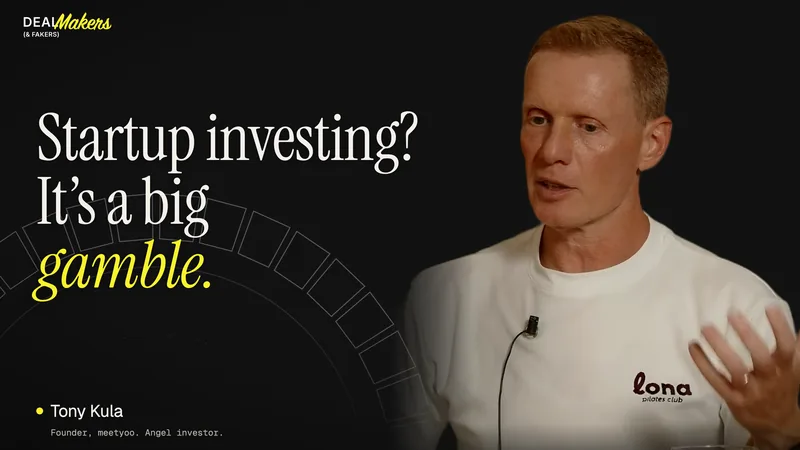
Key points: Said at the table.
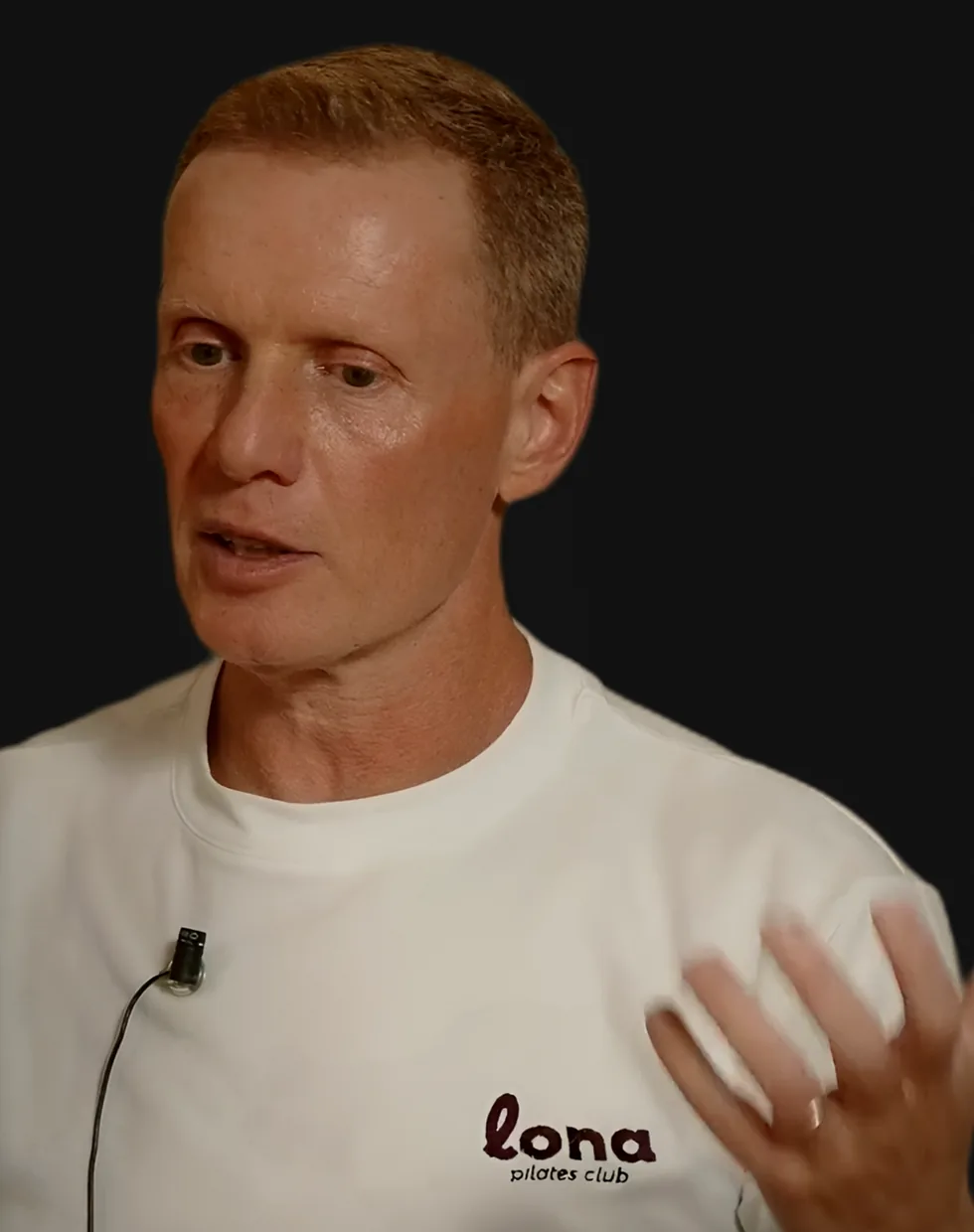
Tony Kula
Founder, meetyoo. Angel investor.
- ▲Why he would not do more early stage investing
Who is Tony Kula?
Tony Kula has started and built companies for three decades. The host says meetyoo, which he built in Berlin, grew from 50 to 150 people in the pandemic and is now a 20 to 25 person company that is profitable again. After his operating career he made almost 20 angel investments and became a limited partner in three funds. He is now building the Lona Pilates studio with his twin daughters.
- 30+years of starting and building companies, by his own count2:15
- 150people at the company before it shrank to 20 to 25 and turned profitable again19:37
- 2twin daughters he is building the Lona studio with12:50
- In his 20s
Sells his first company to an American company, as the host introduces him
0:06 - Berlin
Builds meetyoo, which grows from 50 to 150 people in the pandemic
0:20 - The offer
Turns down a very good all-cash acquisition offer; the deal never comes back
18:26 - Angel years
Makes almost 20 angel investments and joins three funds as a limited partner
4:18 - Today
Backs his daughters' Lona studio as a minority stakeholder, with Frankfurt open and Berlin next
30:47
Early Stage Investing: Why a Founder With 30 Years in Business Would Not Do More
Early stage investing is a gamble, says Tony Kula, and after almost 20 angel investments he would not do more of it. The founder, who has built companies for three decades, says the cycle is too long and the money too illiquid.
On Deal Makers (& Fakers), the founder of meetyoo tells host Niclas Schlopsna why he started too late, what a failing startup should tell its investors and what he'd advise anyone who still wants to begin.
Is early stage investing more hype than substance?
Kula says early stage investing has a lot of hype and show. He sees a lack of substance.
The stories on LinkedIn go from 1 to 5 million in ARR in six months, but those are total outliers, he says. You don't read about the hundreds and thousands of others that need five to 10 years to reach 1 million.
“As someone that has started companies and built companies for three decades, you see that there is a lack of substance”
The host says this is why he started the show. Funding announcements make it look as if everyone is raising millions, yet he sees how many companies fail.
Kula also sees a change in what investors ask for. When he first raised money, about 20 years ago, investors wanted you to have something. Today, he thinks, you need a story or a very good presentation, and most investors haven't been operators themselves, so they buy into a story.
Spotting an outlier is super hard, he says. Sales people like him and the host can sell a vision and are investable, but the smart founders can be quiet, so he looked at how complete the team was.
Why would a founder-turned-angel not do more early stage investing?
The first reason is time. Kula says the cycle is very long and the money very illiquid. He started at 52 or 53, and with a 10-year cycle he asks what he should do with an exit in his mid-60s, when he wants his money working more directly.
He also names a clash of temperament. Early on there can't be much substance, yet as a former operator it drove him a bit mad to watch: he sometimes wanted to jump in and ask what the founders were doing. He had to realise that it's not his company.
“To be very honest, and that's probably not what people like to hear, but I would not do more early stage investing”
What he sees in the market now adds to the doubt. Some companies raise money and grow fast, but they burn €10 to make €1 in revenue, he says. That is a big gamble.
Is angel investing worth it, looking back?
Asked whether early stage investing was good for him, Kula says he would probably not do it again, because the disappointment is bigger, and the outcome comes so long after the money goes in.
Beyond angel investing returns, he met fantastic and incredible people he wouldn't have met otherwise, and learned a lot about others and himself. It confirmed what he already knew: he is very impatient. The money is deployed, and if one company becomes a unicorn, he says, it might be the best idea of his life.
He hopes that one or two companies will become good businesses that are sold one day. His portfolio is three funds and around 20 companies, and he says that is okay.
How should you start angel investing if you still want to?
If you still want to start angel investing, Kula says to start earlier than he did. He lacked the money and the time, but advises beginning in your 40s or even your 30s, while you're still active and know the environment and the people.
Write checks of 5, 10, 15 or 20k and accumulate over time, he says. Starting at 50 with a big check makes you nervous and disappointed about how founders treat money that was so hard earned.
On angel investing returns, his logic is simple: you need at least 20, maybe 30 companies to have one that could potentially return a fund. That takes patience and calm, which he says he doesn't have. And it should be money from an exit that you can say goodbye to, maybe 5 or 10 percent of it.
- Step 1: Start in your 30s or 40s
While you are still active and know the environment and the people.
5:03 - Step 3: Build toward 20 to 30 companies
At least that many, he says, to have one that could return a fund.
8:34
Tony Kula on Deal Makers (& Fakers), 5:03 to 34:31
Kula did both routes into early stage investing:
- Funds: he joined startup funds for the network and better deal access, but says that way isn't very transparent and carries costs.
- Direct: investing on his own gave him a closer relation to the founders. Some who seemed very good early on didn't hold up, while others he was less sure about developed better.
For a different path, Andy Goldstein made 55 angel investments and explains how to invest in startups.
What do angel investors often get wrong?
Kula says he made the mistakes probably all angel investors make. He wanted to be an investor quickly and just poured money in, he says, and asked himself what due diligence is possible when companies are so young.
He also gave little thought to the time frame, which is very long, and the money is totally illiquid, so you can never get it back.
“Every angel investor thinks that he's the smartest in the world and that he can beat the system and he has the access, but the reality is not”
The reality, he says, is that you need extremely good connections and access just to invest alongside people who research the markets all the time and have access to the best founders. Even then there's a lot of luck involved.
Deal flow was a problem for another guest: Vlad Sarca says he did not have enough deal flow when he started as an angel.
What should a founder tell investors when a startup is failing?
Most of the companies Kula backed are more or less alive. In his portfolio, two or three are doing well, the others are doing okay and two or three are struggling.
Founders react differently. Some reach out for help, some he has a closer relationship with, and some go quiet, which he calls not a good sign. Asked whether founders should communicate with their investors and not go quiet, he says absolutely.
He knows it's easy to say, because you feel that you're failing and need the strength to admit it first to yourself. For him, saying it was always a relief. As an investor he always appreciates transparency over a surprise, even when the news is bad.
Some investors only get a final message that the company is winding down, or read it on LinkedIn, he says. That hasn't happened to him.
He compares early stage investing to going to a casino: you need to afford losing all the money you put in, and the chance of that is very high.
He also sees founders with different ideas simply break up. People who haven't started a company underestimate how hard it is to stay together, he says.
What happens when a founder turns down a good acquisition offer?
In the pandemic, the host says in his introduction, meetyoo grew from 50 to 150 people. Kula says the company then had a very good acquisition offer from the leading US company at the time, and he rejected it. They all thought it wasn't enough, and that a process could push the price to over 100 million.
“It was maybe the biggest financial mistake that I made in my life”
The momentum faded and the deal was gone. The offer was all cash, he says, with no earn-out, and he could have left after six months. Today he says he would have accepted.
The company then shrank. Kula says he restructured it and handed it over, and it went from a 150 person company to one with 20 to 25 people that is profitable again. It was tremendously hard to let all these people go and it drained all of them, he says, but the company survived.
He doesn't dwell on it. He says it is what it is, that he still lives a lucky life and that if you have enough, it's enough. What matters more to him is the freedom to decide on his own.
For another founder's story, Nicolas Weber built medneo to more than 40 centers and asks who you are without your company.
Is a profitable company better than a unicorn?
In the closing rapid-fire questions, the host asks whether Kula would pick a profitable company over a unicorn. As an investor, he says, probably a unicorn. For a founder building a company, he prefers a profitable business, and that is him.
- What counts as validationThe VC bubble, as he sees it: For many founders, getting VC moneyA profitable company: Growing nicely on the rule of 40 without burning cash like crazy
- What gets the attentionThe VC bubble, as he sees it: Growth above all, and the potential of a 100 million company and a 1 billion exitA profitable company: Profit, in which he says sometimes nobody is interested
Tony Kula on Deal Makers (& Fakers), 43:58 to 45:26
He calls this growth-above-all thinking the VC bubble. You see a large company's revenue and how much funding it got, he says, and then ask what is left in the company. For normal companies, someone who wants to acquire one also wants a good company.
His own experience shapes the view. Fast growth that everyone hypes comes with a price for founders, he says, and he knows the constant tension to deliver from the time his own company grew fast. He still hopes one of his companies becomes a unicorn, but says he isn't much after hypergrowth: a decent company that can be acquired at some stage is still good.
What does a founder build after early stage investing?
Kula now backs a Pilates studio with his daughters. His twin daughters, who both worked at the same transaction consulting company, told him they didn't want a corporate job anymore and wanted their own studio. He says that was a bit of a surprise.
The plan was to become instructors and work half a year for other studios first. They wanted to open in Munich, but the rents there were too high, so the studio, Lona, opened in Frankfurt, where the family comes from. Berlin is next.
Kula is a minority stakeholder, not even a managing director, and wants to put the money behind a family business. In Frankfurt he became property manager and cleans the floor.
Boutique fitness, he says, is all about hospitality, so it's B2C, a long way from the B2B world he knew. Customers are directly in your face and you see the reviews. A company deal brings a lock-in and a long sales cycle, but a consumer always has a choice, so you have to build loyalty and community.
They don't plan 50 studios in five to 10 years. They'd rather have studios people love that are profitable, he says, and they are not building with investors or for someone else.
If people come stressed from work and leave happy, he says, they did something good. In place of more early stage investing, he now backs a business he calls new and very tangible.
Asked and answered.
5 questions this conversation answers, in plain words.
Tony Kula says probably not for him. He would not do more early stage investing, because the disappointment is bigger than the outcome, which arrives long after the money goes in.
Kula says you need at least 20, maybe 30, to have one that could potentially return a fund. He backed almost 20 companies directly and holds stakes in three funds. The money should be a part of an exit, he says, maybe 5 or 10 percent, that you can say goodbye to.
Kula would start earlier than he did, in his 40s or even his 30s, with checks of 5, 10, 15 or 20k that accumulate over time. He started at 52 or 53, and with a 10-year cycle an exit would come when he is in his mid-60s. A big check at 50 makes you nervous, he says.
In Kula's portfolio, two or three companies are doing well, the others are doing okay and two or three are struggling. Founders react differently when things go wrong: some reach out for help, some go quiet, which he calls not a good sign.
As an investor, Kula says, probably a unicorn. As a founder he prefers a profitable business, because he sees growth above all as a VC bubble.
Talk to Tony, or keep listening.
What the host points listeners to at the end of the episode.
- The guestFind Tony on LinkedIn
The host says the episode will link to Tony Kula's LinkedIn profile.
Said at 45:37Open his LinkedIn profile - His latest ventureVisit Lona
The host says the episode will link to Lona and asks listeners to check it out.
Said at 45:42Open lonapilates.com