Sam Tidswell-Norrish: How Private Equity Actually Works: The $10B Playbook
Key points: Said at the table.
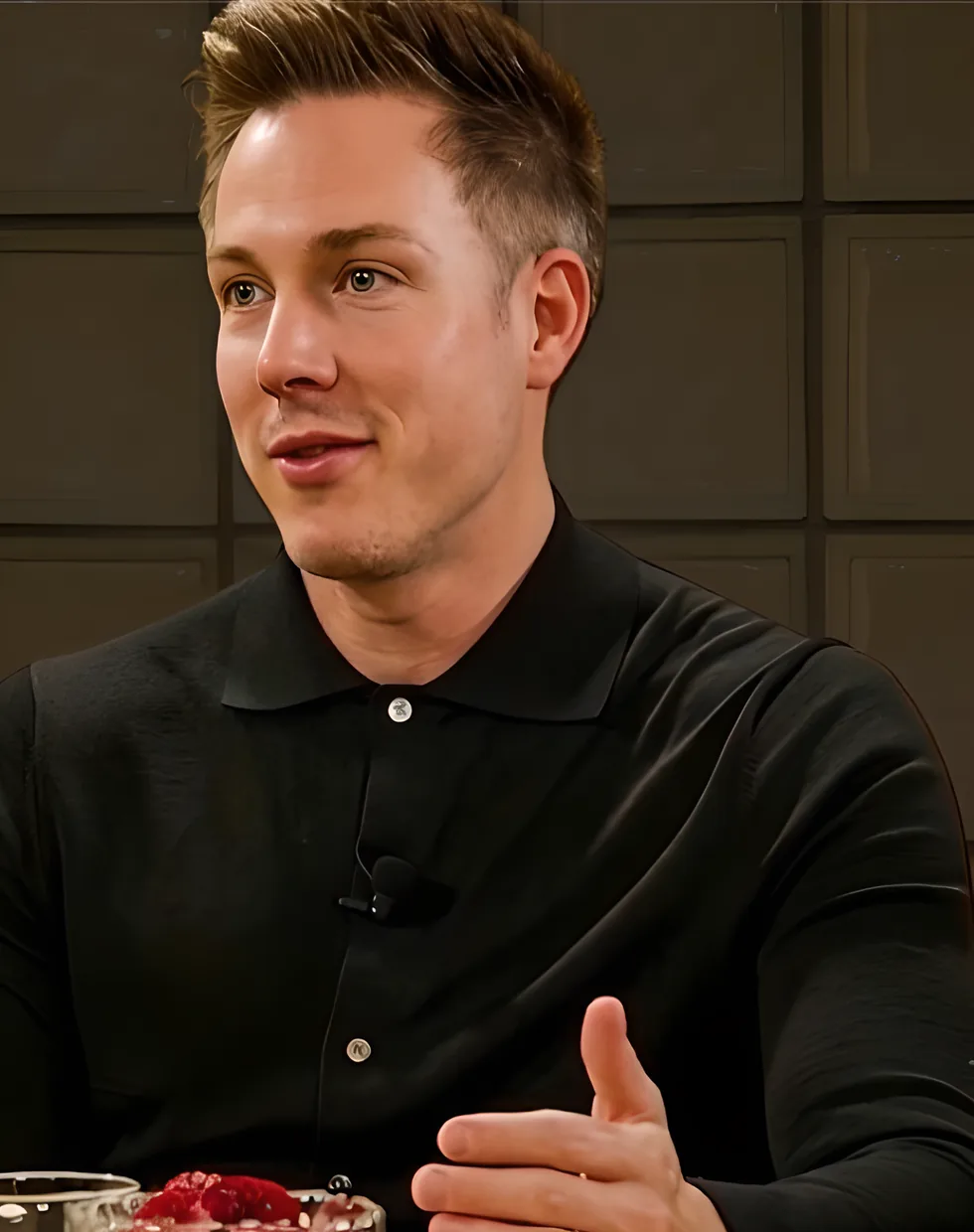
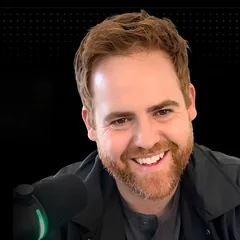
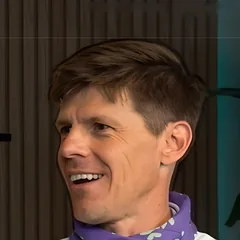
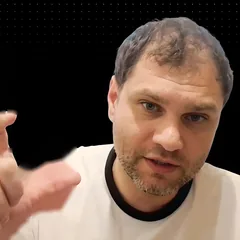
Sam Tidswell-Norrish
Leadership team, Access Holdings. Founder and chair, OPUS. Founding team, Motive Partners.
- ▲How private equity really works
Who is Sam Tidswell-Norrish?
Sam Tidswell-Norrish is on the leadership team at Access Holdings, a U.S. private equity firm, where he looks after capital raising and investor relations. He also chairs OPUS, a community for early-stage founders that he built, and sat on the founding team of Motive Partners for ten years. He says he was no good at trading at Barclays, left to help run a fintech company, and came into private equity through a sale process for it.
- 10years on the founding team of Motive Partners, in the host's introduction0:15
- 4people on the leadership team at Access Holdings, soon to be five2:36
- $2.2Mraised for OPUS in about three months, from people he knew35:03
- Early on
Works on the trading floor at Barclays and says he was no good at it
8:55 - Then
Resigns to help run a fintech company with a friend
9:04 - Next
Starts Motive Partners with someone he met during the sale process
9:23 - Around 2020
Has the idea for OPUS, a community for early-stage founders
11:18 - Today
Leadership team at Access Holdings, a U.S. private equity firm, and chair of OPUS
2:31
How to Start a Private Equity Firm: A Capital Raiser's Take
Sam Tidswell-Norrish has a short answer to how to start a private equity firm: you can't do it alone, and you can't do it without a reason to exist. On Deal Makers (& Fakers), he adds that for every successful firm that forms, ten die and don't make it.
For people working out how to start a private equity fund or how to start an investment firm of their own, Sam brings a capital raiser's view. The episode gives no step plan and does not cover the legal set-up or how much capital a firm needs.
Sam is one of four members of the leadership team at Access Holdings, a U.S. private equity firm, where he looks after capital raising and investor relations, and he chairs the entrepreneur community OPUS. He also helped build Motive Partners about ten years ago, a firm that he says raised not far off $10 billion in total.
From what Sam says, a new firm needs:
- A reason to exist, which for Motive was a laser focus on financial technology capability.
- People on the team who understand the private equity industry.
- A promise that investors understand, which Sam sums up as the seven Ps.
- Time: a fund raise averages 24 months, a figure he relays.
- A network, built before you need it.
What do you need first to start a private equity firm?
Host Niclas Schlopsna asked how a private equity firm gets started from scratch. Sam's simple answer is that you can't do it alone and can't do it without a reason to exist: "You have to have earned the right." He says he had not.
Motive's true founder, who started it with him, had earned it: a proven entrepreneur with a handful of successful fintech businesses. The firm's right to exist, Sam says, was "a unique model with a laser focus on financial technology capability": the plan was to build "the most specialized financial technology firm on the planet" around investing, operating and innovating, three divisions it still has today.
Sam's own way in was a phone call after a sale process for a fintech company he had helped run: someone he met in it asked if he wanted to start a private equity firm together, and he agreed. The firm was Motive Partners.
How likely is a new private equity firm to survive?
Niclas asked Sam whether there is a cap on how many private equity firms can exist, because people in his circle keep telling him they want to start their own fund. Sam's answer is a rule of thumb, ten to one, and he gives no source for it.
“You can't just be operators. You have to bring people in who understand the private equity industry.”
A firm needs the right capability and expertise, he says, because there are a lot of nuances and, without speaking the language and seeing what is coming around the corner, "you're going to find it very hard to survive, let alone to thrive."
What does a private equity firm do, and which job matters first?
Asked which role matters most at the start, Sam says every role matters. In his description, a private equity firm does five things:
- It raises money.
- It finds deals.
- It executes deals.
- It builds value.
- It exits the business.
These do not run one after another: "It's all happening all the time, all at once," Sam says, and each piece takes very different skills.
“Your product is performance. An investor, customer, gives you a dollar and they expect three dollars back.”
To keep raising, a firm has to generate DPI, the distributions it has paid back to its investors. "You need to give dollars back to your investors," Sam says.
How to start a private equity firm: what do investors want to see?
Sam's frame for how to raise capital for a private equity fund starts with a promise, and he sets it against company raising: a founder raises against a vision and a belief that the company can reach 100 million of ARR. A private equity manager raises for a blind pool, because the investments have not been made yet, so investors back the belief that the team can execute its strategy.
The money typically comes from institutional investors such as retirement funds, endowments and family offices, and they invest in a fund for typically 12 years.
Sam says investors have to understand the promise, and he sums up what to get right as the seven Ps, which he calls "super simple to remember":
- Step 4: Place
Where you invest, and which macro and micro trends will prevail over the next ten years.
19:50 - Step 5: Process
How you find deals, since they don't just land in your lap, and what your value creation levers are.
20:04 - Step 6: Purpose
Why you exist. The answer is the story the LP can tell for why they make the allocation.
20:27 - Step 7: Pipeline
If you ask for $100 million and can't give examples of deals you like, that's going to be a challenge.
20:57
Sam Tidswell-Norrish on Deal Makers (& Fakers), 19:19 to 21:11
On the sixth, purpose, Sam says "the world does not need another private equity firm" and puts the U.S. count at 15,000, more than the number of McDonald's. He gives no source, so treat it as his estimate.
On the venture side, Denis Kalyshkin describes how LPs scrutinize the funds they back and says raising for a VC fund is harder than raising for a startup.
How long does private equity fundraising take?
Sam relays a private equity fundraising timeline from a placement agent he asked the day before: the average fund raise takes 24 months, and many take a lot longer.
“If you can do it within 12, you're crushing it.”
A startup raise can be quicker, Sam says, and his own for OPUS, a company raise from people he knew, took maybe three months.
Sam Tidswell-Norrish on Deal Makers (& Fakers), at 21:51 and 35:03
He calls a fund raise "a long and arduous process" and lists what can make the LPs' eyebrows lift: a fund a lot bigger than the last one, which raises the concern that the strategy has changed; a raise before the prior fund's performance has come through; or not enough DPI yet.
On the founder side, Sam says, a raise comes down to the momentum of the individual and the traction of the business. Someone he spoke to the day before told him to create something "white hot in a very small space," so the traction shows before the raise starts.
His own view is that raising money is "a theater" and "an art form," in which you build something with scarcity value that people fear missing out on.
Fund manager Vlad Sarca explains how he raised a new venture fund in Eastern Europe: it took more than a year to launch, he says, and many investors came from his first fund.
How to start a private equity firm: when do you build your investor network?
Sam's reason to build the network early comes from building Motive: you cannot build something based on trust and credibility at the moment you need something, he says, because that is transactional.
Niclas says building deep, warm relationships with investors is the hardest part in his own firm, and asked Sam how to network with investors. Sam starts with "yes and no": it comes more naturally to some people than to others, and it always means putting yourself in someone else's shoes.
"Why should they care? Why should they want to hang out with you?" It is labor intensive, he says: "If you're not going to invest real time building a network, don't bother."
People think of messaging someone who matters to them, and "nine times out of 10, you don't do it," so you have to get programmatic about it. Sam sets reminders on his phone and writes on his hand with pens that don't wash off.
Sam says he invests heavily in LinkedIn, which supplies touch points: "it pays dividends."
On a flight eight years ago, Sam watched a documentary called General Magic and wanted to meet the inventor behind it. Two friends who knew the man did not make the introduction, so Sam messaged him directly on LinkedIn, and he now sits on the board at OPUS.
Founder Marnix Stokvis tells how he reached a former Philips CEO by LinkedIn message.
Niclas passes on a tip from another guest: ask three people in your network to introduce you to the same person at the same time. Sam's take: "Two of them might do it and one might not. And yeah, you've got to play the numbers."
Sam's general rule of thumb is to always offer and try not to ask for anything: "offer, offer, offer, give, give, give." The second you start to get to know someone, you start asking them for things and "they see through that," so he says to give at least three to five times before you ask for anything.
“What are the tools in your kit bag that you can offer people?”
Sam learned that question from a man he worked for early in his career, the greatest relationship builder he has come across. His examples:
- Books he buys for people depending on what they say in conversation, with a note on the inside page.
- A pub: he bought his local pub in London, "super useful because I got to entertain people there all the time."
- Davos: with OPUS he takes up to 50 people each year, and when he meets someone he likes, he offers a place.

How do you raise money from people who already trust you?
Sam chairs OPUS, a community for early-stage entrepreneurs from idea to Series A, typically, and his raise for it is the episode's worked example of a company raise. Niclas is an OPUS member himself and says the two met when Sam reached out to him on LinkedIn during that raise.
Sam says it was by no means a textbook fundraise. The team assessed how much capital it needed and wrote down a very long list of people who knew and trusted him. He wrote to all of them, offered more information and promised "we won't let you down."
“It was a short fundraise. It was maybe three months and we raised $2.2 million. And I guess the reason it was short was everyone I went to was someone I knew.”
Reputation and network are built over many years, Sam says, and he had known some of the people he wrote to for 20 years.
Raising for a community business is a lot harder than it sounds, he says: "a lot of people didn't understand it, but they understood me." He believes OPUS could not have raised the money had it targeted only venture capital firms.
Can you start investing without raising a traditional fund?
Alongside OPUS, Sam says, his team built an investment platform called Day Zero and has made its first investment. He did not want to raise a venture fund for it: he has no time, and "it's also really hard to raise a venture fund."
The two people who run it have not raised institutional-grade funds before, so the structure is a pre-commitment pool from existing OPUS investors on very friendly terms. Its first syndicate plans between eight and ten deals, which Sam calls kind of deal by deal.
The drawback of this model, Sam says, is that there is no management fee, and he plays it down: "The management fee on a $50 million fund is small. And it's probably not worth the headache and the heartache." The $50 million is his example, not Day Zero's size. The benefits, he says, are huge, and he adds that there is "less administration on it, less complexity."
- Pace of investingA fund: Capital has to be deployed at a rate: no luxury of waitingDay Zero's model: No need to deploy at a rate: if the syndicate took five years to deploy, so be it, waiting for the best deals
- CarryA fund: Per Sam: European waterfalls penalize the team, and it takes ages to get carry outDay Zero's model: Carry is paid deal by deal
Sam Tidswell-Norrish on Deal Makers (& Fakers), 42:57 to 43:30
Sam adds that European waterfalls penalize the team, because it takes ages to get carry out of a fund structure. "Not with this model," he says: "We can just pay carry deal by deal." For how the two payout orders differ, spectup's resource hub compares whole-fund and deal-by-deal waterfalls.
How to start a private equity firm: what is the best advice?
Asked for one piece of advice for people who want to start their own private equity fund and one for founders who want to raise, Sam starts with people.
“Don't ever think you can do it on your own. The only wins you will ever have today and for the rest of your career are going to be because of other people.”
Sam's advice on how to start a private equity fund is to focus on the relationships and keep them from turning transactional, and to build a team that has done it before. For founders, he says to start raising money when you are not raising money, and to think through how to build that network "way in advance of it."
Asked and answered.
6 questions this conversation answers, in plain words.
Exceptionally hard, according to Sam Tidswell-Norrish: for every successful private equity firm that forms, he says, ten die and don't make it. On how to start a private equity firm, he says it takes the right capability and expertise, and operators alone are not enough. The ten-to-one ratio is his rule of thumb.
A fund whose investments have not been made yet when the manager raises the money, so investors back the belief that the team can execute its strategy.
Typically institutional investors, Sam says: retirement funds of a country's people or a profession such as teachers or firefighters, endowments and family offices. They invest in a fund for typically 12 years, which makes these long relationships.
Sam puts the number at 15,000 and says that is more than the number of McDonald's in the U.S. He gives no source, so treat it as his estimate. He uses it to show why a new firm needs a purpose: the world does not need another private equity firm, he says.
No. Sam's first answer on the episode is that you can't do it alone and can't do it without a reason to exist, and his closing advice on how to start an investment firm is to build a team of people who have done it before.
In Sam's description it raises money, finds deals, executes deals, builds value and exits the business. These jobs run all at once, and each needs very different skills.
Talk to Sam, join OPUS, or keep listening.
Three things the episode asks you to do.
- For foundersFollow Sam on LinkedIn for the awards
The host asks anyone who hears about the Early Stage Entrepreneur of the Year Awards to follow Sam and him on LinkedIn for updates, and then to apply.
Said at 5:43Open Sam's LinkedIn profile - The communityReach out to join OPUS
Near the end of the episode, the host says that founders and investors who want to join the community can reach out to him, and that anyone in the UK or elsewhere can contact Sam directly.
Said at 52:13See OPUS membership - The showSubscribe to Deal Makers (& Fakers)
At the start of the episode, the host asks listeners who have not yet subscribed to the podcast on YouTube or Spotify to hit that button.
Said at 1:02Follow on Spotify