Martin Janicki: He Planned His Entire VC Career 15 Years Ahead
Key points: Said at the table.
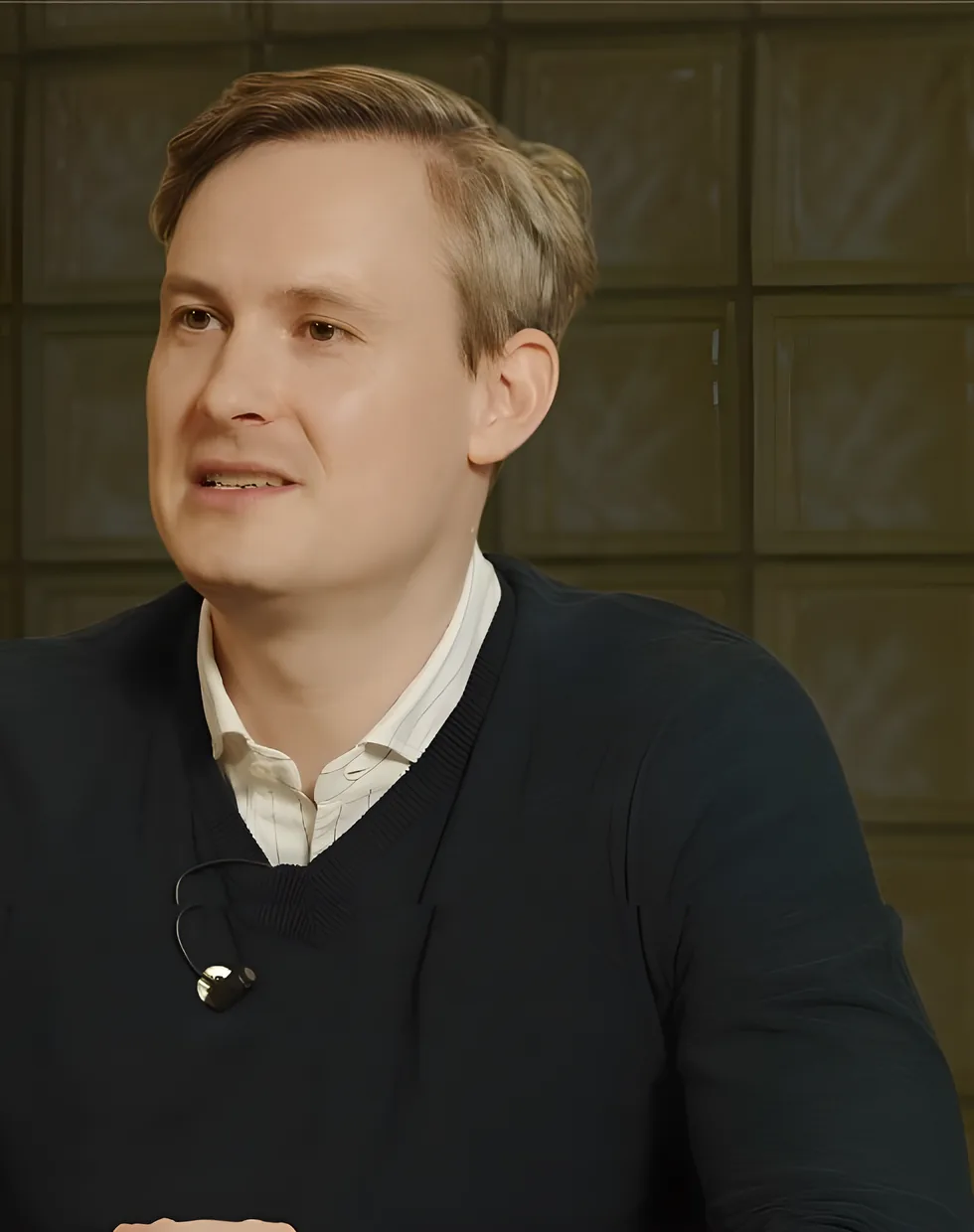
Who is Martin Janicki?
Martin Janicki runs Tenet, a fund that backs founders who buy small services firms, such as accounting firms or IT providers, and rebuild them with AI. He has looked at deals from three seats: analyst at Credit Suisse, venture investor at Cavalry Ventures in Berlin, and now Tenet.
- 3 yearsat Credit Suisse in London, in the leveraged finance and sponsors group3:49
- 7 yearsat Cavalry Ventures, which he joined as employee number two4:48
- <10Massets under management at Cavalry when he joined, he says4:48
- 2012
Reads a book on venture capital and sets a 15 year plan to become an investor
2:33 - Before VC
Spends three years at Credit Suisse in London, advising large private equity houses
3:49 - Venture
Joins Cavalry Ventures in Berlin as employee number two and stays seven years
4:48 - Late 2024
Decides it is time for the next step, and the result is Tenet
5:22 - Today
Runs Tenet, which backs founders who buy small firms and rebuild them with AI
0:24
What Is an AI Rollup? An Investor Who Backs the Buyers Explains
What is an AI rollup? It's a plan to buy a small services firm, such as a tax advisory or accounting practice, rebuild how it works with AI and grow by taking over more firms. Martin Janicki, who runs Tenet, a fund that backs the founders doing this, explains on Deal Makers (& Fakers) why buying can beat selling such firms software.
This is one investor's European view. The episode gives no purchase prices or deal terms and no examples of the AI work itself.
Janicki says he set out in 2012 on a 15-year plan: break into the industry in five years, make partner in ten and steer a firm in fifteen. He is now in year 14, after three years in leveraged finance at Credit Suisse in London, advising large private equity houses, and seven years as a venture investor at Cavalry Ventures in Berlin.
What is an AI rollup, and which businesses does it target?
Janicki says Tenet focuses on what he calls white collar business services. His examples:
- Finance, legal and insurance firms
- Tax advisory, which he calls a great example
- Asset and property management, and all kinds of brokerages
What these firms share is the cost structure: a very meaningful portion, if not all, of their cost of goods sold is personnel cost, people working behind the desk. Tax advisory firms run much as they did 5 or 10 years ago, but that doesn't mean they'll run that way in two, three or five years.
“I think the transition in these sectors will be not dissimilar from transitioning from Blockbuster Video to Netflix.”
Selling the tools to people so they can do it themselves probably won't work, he thinks. The AI rollup strategy he describes starts small, with one firm:
- Step 1: Buy one firm first
A strong motion, he says, because selling the tools so people do it themselves probably won't work.
35:14 - Step 3: Create additional capacity
The aim of the transformation; he later says it lifts the throughput constraint.
35:22
Martin Janicki on Deal Makers (& Fakers), 35:14 to 37:18
Another guest, VC Denis Kalyshkin, makes a related point on why legacy industries make sense for software investors: manufacturers, construction companies and farmers typically want to pay for a turnkey solution and don't want to build it themselves.
Why buy a services firm when selling it software is an option?
Janicki won't call it easier than selling such firms software, but buying one is more predictable if you are systematic about it, and the value captured is multiple times larger.
He backs this with rough figures for a typical small German accounting firm:
- What it brings inSelling software to the firm: A per seat price he guesses at 200 to 250 a monthBuying the firm: A small firm with 5 to 15 people and 1 to 2 million in revenue
- Limit and marginSelling software to the firm: There is probably a limit to what he can charge per seatBuying the firm: Net margins of 25 percent or more, typically
- OutcomeSelling software to the firm: Depends on convincing people to use the suiteBuying the firm: Hundreds of thousands in profit if the core operations change
Martin Janicki on Deal Makers (& Fakers), 30:01 to 31:17
His first investment is Taxforce, a German tax advisory company. Its three founders are a tax advisor, the one who builds the tech and a CEO who runs everything. They wanted to roll up tax firms but felt they were missing the tech opportunity.
They also reasoned that if they built software, nobody would buy it, because of a graveyard of accounting software providers in Germany that went nowhere. Janicki says that was the premise on both sides, very similar to Tenet's.
Why do small European firms adopt so little software?
Janicki's rule of thumb for the market an AI rollup works in: the smaller and the more German the company, the worse the reluctance to adopt new tools and software. Why that is, he says, is pretty much anybody's guess, but he names demographics as a meaningful contributor and adds two observations:
- Owner age. More than a third of small business owners are well into their 60s, and a lot of them, if not most, have no succession plan. If they didn't embrace SaaS (software sold by subscription) in their 50s, he says, they won't go all in on AI at 60.
- No off-the-shelf fix. AI takes implementation: it's finicky, it needs calibrating and things break, so getting a company ready for AI agents is multiple times harder than an ERP rollout, a company-wide software installation that was itself not trivial.
- Fear of failure. He says this reaches beyond small firms and is a matter of excitement for new things and maybe fear of failure, which is smaller in the US. His rule of thumb for a startup's enterprise pilot there is a sales cycle a quarter of the length and a contract three to four times the size, one reason European startups head to the US early.
“You have on one side the European SMB, which is the immovable object, and on the other side you have AI, which is the unstoppable force.”
Host Niclas Schlopsna recalls three figures from an earlier chat with Janicki: 60 percent of US companies use and buy software, against 5 percent in Germany and 8 percent in France, a figure he first recalled as 7. He hedges that the numbers may have increased, and neither speaker names a source, so they stay a recollection.
Janicki builds on them. The US population is eight times as large, but with those penetration numbers overlaid he puts the US market at between 50 and 100 times the German one.
How is an AI rollup different from a traditional buy and build?
A classic buy and build, as spectup's guide on how a buy and build strategy is structured describes it, has a platform company buy add-on firms on the way to an exit; the guide also asks whether a roll up strategy is the same thing. Janicki says what sets an AI rollup apart starts with size.
He sees a whole ocean of small, independently run businesses whose owners are set to retire. Their EBITDA (a measure of operating profit) is under two million, which he calls too small for a classic buy and build strategy, and they depend too much on the owner.
On Tenet's platforms such firms can grow without the owner, or serve customers better than before.
He adds a European buyout lens: lower acquisition multiples, often better availability of financing, healthy margins and businesses that are highly undigitized. Once you get a foot in the door with digitization, which he says Tenet has never seen fail with its approach, any improvement counts for more. Tenet is a young firm, though, and Taxforce is its first investment.
Where does the margin in an AI rollup come from?
“What we're seeing in the market is that after you purchase a firm and you implement new processes, a big chunk, often the majority, of the margin expansion actually comes from growth rather than just cost optimization.”
He gives no figures; it is what he sees in the market. The reason, as he lays it out, is a throughput constraint in fragmented services industries, where owners have pent-up demand but cannot add people fast enough. A roll up strategy like Tenet's is meant to lift that constraint, he says.
- Step 1: A practitioner starts a firm
They quit a job, start their own business and typically hire a dozen or two dozen people.
36:01 - Step 2: Growth needs more heads
Roughly linear headcount with diminishing returns: to double revenue, a firm needs two and a half times the headcount, he estimates.
36:08 - Step 4: Management gets hard
A practitioner can't realistically manage 50 or 60 people; it takes departments and processes and isn't worth their time.
36:34 - Step 5: Demand waits
Owners know where to get more business but are throughput constrained, the constraint he says Tenet's approach lifts.
36:48
Martin Janicki on Deal Makers (& Fakers), 36:01 to 37:03
Why would a venture investor leave early stage venture for buying businesses?
Coming out of his previous firm in late 2024 or early 2025, Janicki asked what excites him, where the puck is going and what he is qualified to do. His first premise was that the next decade plus is dominated by AI.
On geography, he sees a pure AI investor in Europe at a structural disadvantage against the US. Early stage valuations look much like America's, but scale-up capital is scarcer, and there are far fewer buyers for tech companies worth 500 million to a billion plus.
Going public in Europe as a tech company is, in his words, pretty close to impossible unless you list in New York.
Tenet invests at inception as the first investor, after typically working with the team for multiple months. He says the diligence on targets and markets keeps its value, while in early stage venture, where go-to-market is unpredictable, you write a ticket and expect 50-50 odds.
Asked about LPs and family offices, Janicki says Tenet has just started to learn how unfavourably limited partners (LPs, the investors in a fund) look at venture capital, and he calls it "a really unpopular asset class". He came from a firm that was squarely an early stage VC and now runs what he calls "a truly novel hybrid model".
He cites a chart he saw in Tenet's office: European family offices put roughly a quarter of their allocation into private equity and between one and two percent into venture.
“If you're on LinkedIn or if you look at podcasts or whatnot, you would think that venture capital is the biggest asset class in the world.”
Venture University's Andy Goldstein lays out why family offices and pension funds should invest in venture. He says it makes sense for a family office to put 2 to 5 percent into venture, against the 1 to 2 percent Janicki's chart shows.
How do you raise a fund for a hybrid of venture and private equity?
Host Niclas Schlopsna calls Tenet half startup, half takeover, a model that venture capital and private equity don't quite fit.
Janicki's general fundraising advice applies to funds and companies alike:
“You don't need a lot of people to feel lukewarm about you. You need a few people to feel really strongly about you.”
Because the AI rollup model is new, he says, Tenet is probably not the best investment for an LP who needs to fit everything into classic buckets. It resonates most with first-principles thinkers who ask what the strategy is and what promises sit underneath it.

A substantial amount of Tenet's capital already comes from the US, he says, where some derivatives of the strategy already run.
He says Tenet can present itself credibly "through the lens of it being a blue ocean and not a red ocean opportunity", because any improvement it achieves is much more meaningful. The host adds that Janicki's track record builds credibility with LPs over the years.
Sam Tidswell-Norrish, who handles capital raising at a US private equity firm, explains how raising a private equity fund works.
What kind of founder does an AI rollup investor back?
Janicki describes the typical team behind an AI rollup, a kind of entrepreneurship through acquisition: two to three founders in their mid 30s, maybe a little older. One takes the technical side and one works on and in the business.
A couple of years ago such teams might have started a vertical SaaS company, he says. Now he sees formerly venture-backed founders and senior operators who raised at a very high valuation during the pandemic, were wealthy on paper for a brief moment and learned over about five years that the number was never real.
They see the same opportunity as Tenet but want to ride it in a risk-adjusted way, without worrying whether anyone will buy the software they built. The route Tenet backs is buying an existing firm, sometimes called entrepreneurship through acquisition.
Tenet also wants founder market fit: founders who have spent time in the industry, or at least researched it, before they start the company.
“We do not internally research an industry, a topic, and look for somebody to execute it for us.”
His reason: as with Blockbuster and Netflix, nobody knows how these markets will change, only that they will, so Tenet backs the people at the forefront of that change.
Transforming an industry is hard to hand over as a managerial assignment, he says, because it needs constant reinvention, and he calls that a classic founder's mindset.
Asked about red flags, Janicki says the vast majority of teams he speaks to don't have the right approach: startup people who think they can just do some M&A, and private equity people who think they can do what they've always done with some AI sprinkles on top. Neither is right, he says. It takes a hybrid approach to transforming an industry, with both sides of the coin.
Nobody is going to be perfect at everything from the beginning, he adds, but it often starts with a lack of awareness of what Tenet is trying to do.
Asked and answered.
5 questions this conversation answers, in plain words.
A rollup buys one small firm, rebuilds how it works to create capacity, then grows organically and by taking over more firms. That is the AI rollup version Martin Janicki of Tenet describes.
Janicki's firm, Tenet, targets what he calls white collar business services: finance, legal, insurance, tax advisory, asset and property management and brokerages. What they share is that a very meaningful portion, if not all, of their cost of goods sold is personnel cost behind the desk.
Janicki says owners who didn't embrace SaaS in their 50s won't go all in on AI at 60, and a lot of them, if not most, have no succession plan. AI also needs implementation: it's finicky, and getting a company ready for AI agents is multiple times harder than an ERP rollout.
At Tenet, that is left open. Janicki says its companies are very agnostic about raising venture capital in the future, and he knows of nobody else who does it that way.
Janicki says the vast majority of teams he speaks to lack the right approach: startup people who think they can just do some M&A, or private equity people who add some AI sprinkles on top.
Visit Tenet, or keep listening.
What the episode asks you to do once it ends, and one related listen.
- The fundCheck out Tenet's website
The host ends the episode by telling listeners to check out the fund website, which he says made him feel he was inside one of his own financial models. Earlier, Martin Janicki says an exceptional founder, even at 28 or 29, should feel encouraged to reach out.
Said at 54:02Visit Tenet - The showFollow Deal Makers (& Fakers)
The host asks you to follow the podcast so you don't miss the next conversation.
Said at 54:22Follow on Spotify - Keep listeningHow raising a private equity fund works
Sam Tidswell-Norrish, who handles capital raising at a US private equity firm, takes the fund-raising question from the other side.
Listen to the episode