Marnix Stokvis: A Cold DM Booked the Ex-Philips CEO
Key points: Said at the table.
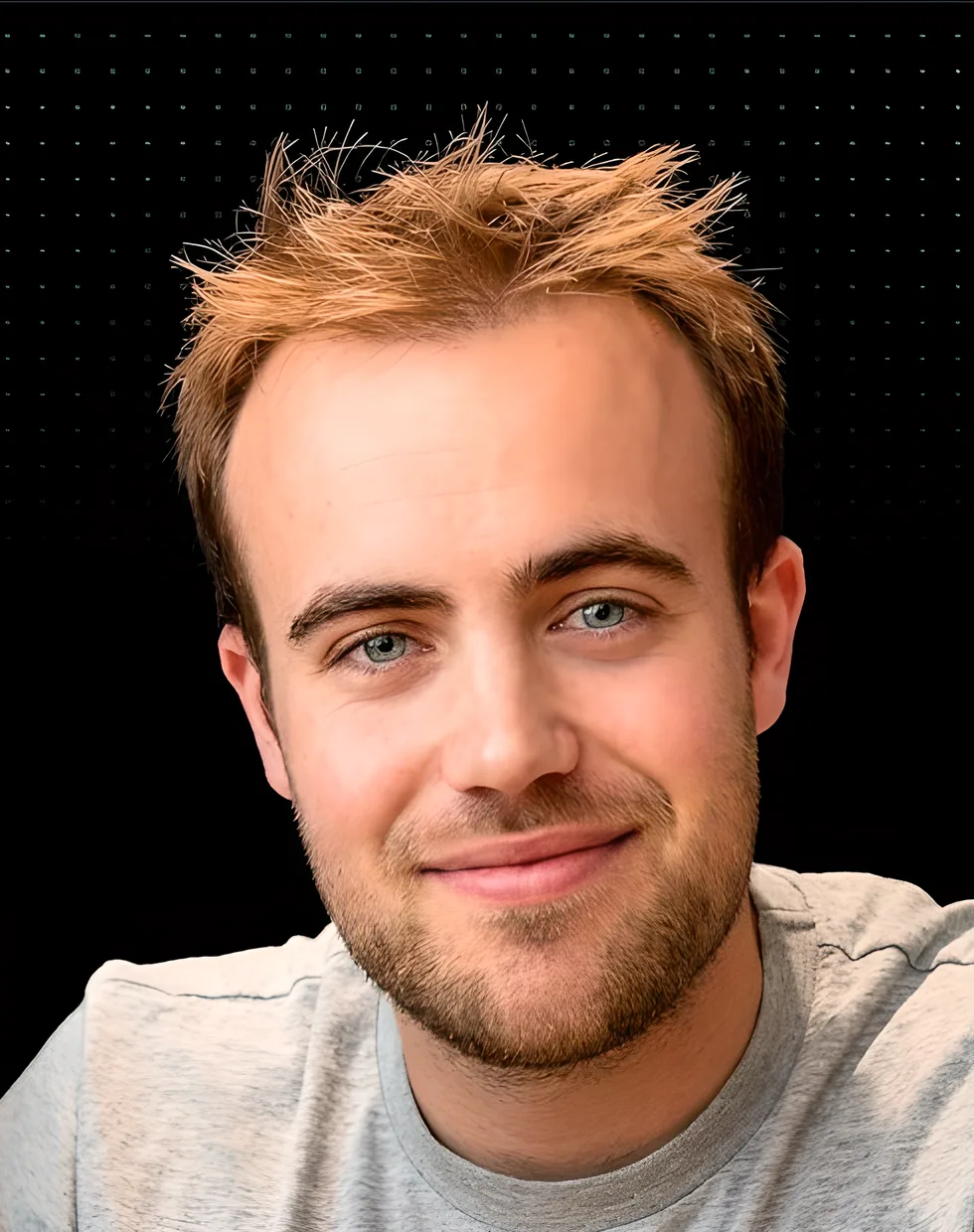
Who is Marnix Stokvis?
Marnix Stokvis is co-founder and CEO of Aquablu, a Dutch company that says it is building the largest hydration platform in the world, starting in B2B. The idea came to him at 22, on a surf trip to Cape Town, as Day Zero neared and the beaches were covered with plastic bottles. He started building the first product while still at university, together with a childhood friend.
- 22his age on the Cape Town surf trip where the idea for Aquablu began4:48
- 1 yearas a student brand manager for Red Bull in Rotterdam, before he founded his own company8:21
- Friendshe co-founded Aquablu with a childhood friend, and they are still best friends6:43
- At 22
Surfs in Cape Town as Day Zero nears and sees beaches covered in plastic bottles
4:56 - At university
Builds the first filter product, with his childhood friend as co-founder
6:04 - 2020
Makes a hard bet on B2B while everyone else focuses on B2C during COVID
17:59 - Seed
Fills a seed round with angels, led by the former Philips CEO
27:56 - Today
Co-founder and CEO of Aquablu, getting ready for a Series B
1:36
What Is an Angel Round? Real Terms From a Hardware CEO
What is an angel round? For Marnix Stokvis, CEO and co-founder of Aquablu, it was his seed round, filled by angels who held non-voting shares, with a minimum ticket, a practical cap and a bank covering the other half. The former Philips CEO led it, after Marnix first wrote to him on LinkedIn asking for a chat and the two stayed in informal contact.
Marnix calls it his seed round, and the episode gives no general definition of an angel round.
Aquablu makes a system for workplaces that serves flavoured water with added vitamins, and Marnix says it is often compared to espresso for water. When the episode was recorded, Aquablu was pre-Series B, with 80 full-time employees and around 200,000 daily active users in 16 countries in Europe.
How is an angel round structured so founders keep control?
Marnix says Aquablu wanted angels who were interested in the business, could open their network and add strategic value, among them specialists in finance or legal and potential big clients. It called the group Friends of Aquablu and set the terms:
- Ticket size. The minimum ticket is 100k. There is no hard maximum, so that more people could join and no single investor could take the whole round; around 500k is probably the cap.
- One entity. The angels were put together into one entity and hold non-voting shares, which makes them economic shareholders and leaves the founders in control.
- A discount. Because the shares don't vote, Aquablu gave a discount to make the round attractive. Marnix gives no figure for it or for the valuation.
- Valuation. Marnix worked it out with the former Philips CEO, who had advised Aquablu before leading the round, and another angel.
Marnix Stokvis on Deal Makers (& Fakers), at 23:51
Niclas Schlopsna, the host, calls it special that Marnix changed the power dynamic: he built the structure he liked and set the terms he liked. Asked how he knew how, Marnix says he has a finance background from university, a good CFO had joined three months earlier, and a few angels helped him shape the round.
On the money, Marnix puts the total raise at 8 million, half from the bank and half from the angels. Raising all of it from angels would have meant a very big group, so he went back to the bank, with which Aquablu had a very good relationship, and it took the other 50%. The angels had to raise approximately 3.5 to 4 million.
“I think it was just setting our own terms, being very clear about what you do, very clear about what your plan is.”
Kirk Donohoe, founder of GRAND, says an angel in a seed or pre-seed round would be lucky to get an investor update after investing.
When is a company ready to raise an angel round?
The trigger Marnix names is growth: after the 1 million bank loan, an additional loan and product sales, Aquablu reached an inflection point where it had to get more people in and spend more on marketing, so it had to raise capital.
Whether that is the moment for venture capital depends per company, he says. What Aquablu had in place before the seed round, going by his account:
- Proof the model works. Aquablu hit two months of profitability to show it could be done, then went back to growth. Niclas's research dates that to April 2025, before the round.
- A reason to pick angels. Aquablu talked to venture capital as well, but it didn't feel like the right time.
- A data room. All the details were ready for anyone who wanted to do due diligence, and the majority of investors loved the transparency and the clarity.
How does a hardware startup bootstrap before raising?
Bootstrapping a hardware company is like chewing glass, Marnix says. Aquablu started with a loan from his family and needed more capital, so he and his co-founder sold the filters as a separate system, online with Google ads.
During development, a small first order from a partner contract opened the door to the bank, which gave Aquablu an initial loan of 1 million and an additional loan later. That is when the company started hiring, well before any angel round. Marnix does not say whether these loans are part of the bank's half of the 8 million.
Niclas says he had never heard of a hardware startup getting a bank loan this way.
The pivot to B2B in 2020 was a hard bet, made while everybody focused on B2C during COVID. The most painful product moment came back then: Aquablu made about 100 units at a cost price of around 800 euros a unit, and 100k in stock products it wouldn't use, Marnix says, is very painful for a bootstrapped company.
With the materials for the other products, Aquablu had to officially write off 150k plus in euros at a company with six employees, and Marnix says it never considered stopping.
How should a hardware startup run pilots with its first enterprise clients?
Aquablu's first clients were enterprise clients, and Marnix says it happened a little by chance. His belief was that a drinks product has to be experienced, so the plan was to get the first five clients to pilot it. One client started with two products and within two months loved it, growing to, he thinks, about 40 systems across its offices in Europe.
The first pilots were never free, so that clients understood they had to pay. After every one of them succeeded, Aquablu ran free and paid pilots both, to boost sales.
If he could give one tip, he says, it is to run them paid, because then clients understood the business behind it and the cost.
“Make sure that you always have a beginning and an end date. So that is not just an ever ongoing pilot.”
Aquablu now has hundreds of clients in Europe and still does pilots for anyone who wants to try the product. The maximum duration, he thinks, started at 2 months, fell to 1 month and now 2 weeks, and two details came with it:
- Define success at the start. A customer satisfaction (CSAT) score above 80% would count as a success, for example.
- Offer a one-hour version. The hydration van pulls up at an office and people go outside to taste it, a mini version of a pilot.
How to find angel investors who can lead a round?
Asked how he got into the room with the former Philips CEO, Marnix says he and his co-founder had talked to family and friends who are entrepreneurs, but had no advisor who knew consumer electronics. They thought of Philips, whose CEO had just left the company.
Marnix messaged him on LinkedIn, a cold message that cited the shared university and asked for a chat, a coffee or a glass of water. The former CEO came by, loved the product and had a good connection with them instantly. Marnix thinks the former CEO saw two passionate young founders and was maybe impressed by what they had built.
They stayed in informal contact, and at one point Marnix asked whether he'd like to invest. The former CEO said he would, and Marnix asked what if he led the round. Marnix thinks the angel round took about 6 to 8 weeks from start to end.
The big name helped Aquablu reach more angels and showed the validity of the round, and the former CEO has been very closely involved since.
For how to find angel investors beyond the lead, his account is short: Aquablu went out and found a lot of interested ones.
Niclas puts the success down to targeting: the message was written for one person, the timing was right and the university tied them together. Marnix agrees it makes the message personal: not AI generated and not one of 50.
“Whether it's even a 10 minute coffee conversation, that's your moment to actually go.”
Jessica Liew, a founder who raised a pre-seed round, mixed introductions with cold outbound and says one of her larger investors came from cold outreach.
Can you raise an angel round live on a podcast?
Marnix did, on the Dutch Dragons podcast, though it wasn't planned at all. He went to tell Aquablu's story, planning at most to mention that the company might be raising.
The people at Dutch Dragons got so excited about the business model that they asked live on air whether they could invest. Marnix said that could work, and they committed 750k during the episode, with champagne on the podcast. The host's research puts the amount at 750k euros.
After the recording, one of the Dutch Dragons people asked whether they could do more. Marnix called the CFO to check what was hard committed and what was still soft, and says they signed on the spot, with the transfer within a week.
Dutch Dragons got a lot of inbound requests after that episode. Asked whether audio is a fundraising tool, Marnix says it can be a great tool, though he never thought it would be.
Dutch Dragons has since launched fundraising on the podcast: a founder raises in a long conversation and afterwards people can invest. He says it follows a similar structure to Friends of Aquablu and thinks participation starts from 5k.
How do you prepare for Series B funding before the round opens?
Series B investors will be institutional investors or others, Marnix says, a more diverse group this time, and the round won't be an angel round.
Before you officially start Series B funding, he recommends 3 to 4 months of groundwork, and Aquablu wasn't pitching in it.
- Step 1: Reach out to funds
Three to four months before the official start: get introductions and have casual conversations.
33:48 - Step 2: Check the fit both ways
No pitching. Aquablu wanted to know if the fund was a good fit, and the fund if Aquablu was.
33:58 - Step 3: Share a small information deck
Not the official deck: one the fund can look at and send around internally.
34:26 - Step 4: Put interested funds on the list
If a fund is truly interested, it gets signed up for the data room.
34:40 - Step 5: Run a structured process
Once the data room is live, the aim is a term sheet as quickly as possible.
34:46
Marnix Stokvis on Deal Makers (& Fakers), 33:48 to 34:57
Niclas noted that some funds had already signed up for the data room before it opened, and once it goes live Aquablu runs, Marnix says, a very structured Series B fundraising process. It differs from the seed round in two ways:
- Who investsAngel round: Angels, in one entity with non-voting sharesSeries B: Institutional investors or others, a more diverse group, not angels
- How it startsAngel round: A cold LinkedIn message to the future lead, then a lot of interested angelsSeries B: Three to four months of casual talks with funds, then data room sign-ups
Marnix Stokvis on Deal Makers (& Fakers), 26:49 and 35:25 to 35:36
What fundraising mistake do hardware founders make most often?
Hardware founders often raise a little bit too much capital at the start, Marnix says, hire a team and then go full submarine mode, focused on the product. He agrees you need capital for hardware, but if you don't force yourself out there, you might be making something the market doesn't want.
Aquablu forced itself out by bootstrapping. It put a very early prototype in front of partners, clients, the partners' service installers, salespeople and marketing people. Marnix says he felt so much pain looking at it, but the people he showed it to loved it and gave a lot of feedback.
A deal with a partner followed 6 months later, and iterating on that feedback gave Aquablu a product marketable from day one.
Raising capital in the beginning, as Aquablu did in its angel round, is a great thing, Marnix says, but you have to go out there.
“Make sure that if you're not bootstrapping, at least you have the bootstrap mentality.”
Nick Kanopoulos, founder and CEO of Brite Solar, lists the questions the European Innovation Council's panel put to him, some of its members working for VC funds: patents, competition from China and supply chain.
Asked and answered.
5 questions this conversation answers, in plain words.
In the round Marnix Stokvis describes, which he calls his seed round, angels bought non-voting shares through one entity. The minimum ticket was 100k, around 500k was probably the cap, and a bank took the other 50% of the 8 million raised.
Marnix thinks his round took about six to eight weeks from start to end, and says it went pretty quickly. He does not say how long the informal contact with the former Philips CEO ran before he asked him to invest. Aquablu went in with a data room ready, a CFO who had joined three months earlier and two months of profitability to show.
Marnix describes one route. Aquablu had no advisor who knew consumer electronics, so he sent the former Philips CEO a cold LinkedIn message that cited their shared university and asked for a chat, a coffee or a glass of water. For the other angels he gives no method beyond that Aquablu went out and found a lot of interested ones.
Aquablu talked to venture capital as well, but Marnix says it did not feel like the right time. The company wanted people who were interested in the business, could open up their network and add strategic value. When that is the right moment, he says, depends per company and on how it has been building for the last years. For Series B, Aquablu is opening up to institutional investors or others, not angels.
At Aquablu, Marnix looked at which valuation the company was comfortable with together with the former Philips CEO and another angel. Because the shares don't vote, Aquablu also gave a discount. He gives no figure for either.
Talk to Marnix, or keep listening.
What the host asks you to do once the episode ends, and where to go next.
- The companySee Aquablu's details
The host says all the details of the company are in the episode description.
Said at 41:15Visit Aquablu - For institutional investorsReach out to Marnix on LinkedIn
The host says an institutional investor who wants to speak to Marnix can reach out to him directly on LinkedIn.
Said at 41:20Open his LinkedIn profile - Keep listeningWhat an angel gets after investing
Kirk Donohoe on how little information an angel gets after investing in a seed or pre-seed round.
Listen to the episode