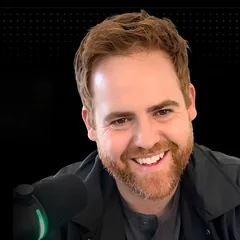
Lars Eickhoff: A 24-Person PropTech. 19% MoM. $0 VC Funding.
Key points: Said at the table.

Who is Lars Eickhoff?
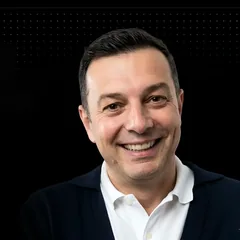
Lars Eickhoff is the co-founder of DeepImmo, a platform that monetizes transparency on the real estate market and now serves real estate agents. He learned in Munich that the market's intransparency costs every player, worked in consulting on that problem for large developers and investors, then built DeepImmo with a co-founder. They funded it with family offices after VCs gave poor feedback.
- 5 yearssince he and his co-founder started DeepImmo2:17
- 24 to 25people on the team, doubled this year and last8:08
- 19.6%revenue growth last month, after over 10% every month this year29:51
- Before
Works at a consulting firm, solving the transparency problem for large developers
1:57 - 5 years ago
Starts DeepImmo with his co-founder, for those who cannot afford big projects
2:11 - 2+ years
Builds the first version from the kitchen of their apartment, as two non-engineers
7:35 - Then
Raises capital to hire the engineers they lacked
7:51 - Today
Co-founder of DeepImmo, a platform for real estate agents
1:49
Raising Money From Family Offices: A First-Time Founder's Story
Raising money from family offices worked for Lars Eickhoff, co-founder of DeepImmo, after relatively bad feedback from VCs: a family office came in on his 300,000 euro pre-seed round, and the deal was structured within one week. He tells the story to host Niclas Schlopsna on Deal Makers (& Fakers).
Lars was a first-time founder in proptech when the VCs hesitated. The round size and the speed come from his one deal, told by the founder who raised it.
Why did VCs hold back on a first-time proptech team?
Lars decided to build a first version before he went to investors. His consulting background told him to have a solution first, and at the entrepreneurship centers of the Munich universities he and his co-founder were told to prove the need by building the product by hand for one consumer. The benefit, he says, shows only once the product exists.
Friends and the university told them to go to VCs for the money to hire an engineering team. They were 21 and 22 and had no clue how that worked, so they built a network.
They met smaller and bigger proptech investors, and the conversations were generally good. Still, a team of first-time founders aged 21, building a B2B2C product in proptech, wasn't too attractive to the market at the time. In the few conversations that got far, the response he often heard was:
“Who owns the money that's coming to the VC? Real estate investors, often in Germany. And they got successful without technology tools.”
As the proptech investors put it to him, the real estate investors behind the money saw no need for new technology and cared more about optimizing buildings and construction potential. Lars sums up the feedback as relatively bad, though everyone was generally interested in the vision.
How does raising money from family offices work for a first-time founder?
For Lars, raising money from family offices began by accident: through their private network he and his co-founder met a family office, and they realized then that VCs weren't the only ones open to this kind of money. Private individuals were too.
The family office pre-seed deal:
- Round size. A pre-seed round of 300,000 euros, which Lars sets against the typical angel ticket of 50,000 euros and calls "not bad in Germany".
- Speed. The conversations were quick, both sides had a similar vision of where the company should go, and they structured the whole thing within one week.
- Timing. It was the last moment for the company, with not much room to go on longer.
Lars calls the family office a business partner. He describes the investor behind it as someone who made the money he invests through his own company and who is very active in M&A, privately and in business, but he does not name the family office or give its stake or terms. The two sides still finance the company together, and DeepImmo isn't yet cash-flow positive, though they're working toward it.
Jessica Liew took the opposite route: how she found a family office investor through targeted cold outreach, one of her larger investors.
How is raising money from family offices different from venture capital?
Lars ties the difference to risk. With little experience, the freedom to take the company where they believed it should go mattered to him and his co-founder. Then he says:
“This is something that the family office can afford, this risk profile, but a VC fund often can't.”
The host sees family offices investing in startups differently from VC funds: the big advantage, he says, is that a family office doesn't run a long process. At a VC fund a founder typically starts with a call with an analyst, moves upward and finally meets a partner, who discusses the opportunity in a partner meeting.
He adds that family offices are often leaner and can be strategic partners, while many VC funds he knows just wire the money.
- Risk profile (Lars)Family office: Can afford itVC fund: Often can't
- Process (the host)Family office: No long process, often leaner, depending on structure and sizeVC fund: A call with an analyst, then upward to a partner meeting
- After the cheque (the host)Family office: Sometimes a strategic partnerVC fund: Many just wire the money, with little operational involvement
Lars Eickhoff and Niclas Schlopsna on Deal Makers (& Fakers), 18:04 to 19:32
For a longer look at family office venture capital, spectup's resource hub explains how family office capital differs from VC and how to get access.
Do you need warm intros and hype to raise from VCs?
Lars repeats a famous saying he expects to be unpopular: VCs are like sheep. One sheep crossing the farm draws no attention, but when 10 or 15 run, the whole group runs after them. That's the philosophy you try to create in fundraising, and he had to learn it.
One way to create hype, Lars says, is to claim an oversubscribed round, with words like "I'm already oversubscribed" even after only two talks, which he describes as the old philosophy of VC fundraising.
His warm intros came from a routine:
- Step 2: Find a common friend
Spot the person who works at the VC fund and a friend you share with them.
20:31 - Step 4: Repeat it, 50 to 80 times
He did this for 50, 60, 70 or 80 VC firms. The call then starts with the person at the fund softly briefed on what you do.
20:41
Lars Eickhoff on Deal Makers (& Fakers), 20:26 to 20:51
Done for 50, 60, 70 or 80 VC firms, it gets you what's called a warm intro.
On another episode, Florian Myter describes how outreach to about 60 investors still ended in a warm introduction that closed his round.
How do you sort feedback from investors?
You need critics, Lars says, and one of the biggest mistakes he sees is people who think they have seen and lived everything, when no one has.
To sort the feedback, he and his co-founder drew on their consulting background, where they were taught to think analytically and to question their own ideas and other people's. His number one rule, at the office and in a meeting with a VC, is that the ego stays outside the door.
In one trial pitch an investor from a later stage grilled them, which Lars had never experienced before. They would have walked out feeling it was bad, but it felt the opposite: the grilling hit points that were only mildly important, and the investor was quite positive on what was fundamental to where they wanted to go.
After 50, 60, 100, 200 or 500 conversations like these, you build a gut feeling for which advice is good.
With the family office, the two sides felt they spoke the same language and shared an entrepreneurial spirit, Lars says.
What happens when you fumble the hype?
Niclas asks how a founder keeps the hype and the positivity up when the situation is hard. Lars says they didn't:
“To be transparent, we fumbled the hype. We learned afterwards that we should have kept it up.”
They stretched the process over too much time. Trial interviews went well, but investors asked who else he was talking to, and he didn't have enough names. He doesn't like lying, he says, and that will never be him or his co-founder.
Niclas recalls Lars saying that raising money from family offices came at the right time for him, and that had it come later it would have been very difficult for the business.
What keeps a founder going through a raise?
Fundraising and building a company are extremely tough, and nothing prepares you for it, Lars says; he has done it for five years. What kept him going was the dream of having the platform himself, as a user from the industry. Money was irrelevant to them, and still is to a pretty certain degree.
Niclas says it is his feeling that this drive is the likely reason the family office invested, because it showed what type of founder Lars is.
What traction do you show with almost no revenue?
At the first round the revenue was very soft: about 2,000 or 3,000 euros a month, which Lars calls very little at the time.
Investors asked what the traction was. You can pull all sorts of stuff out of the backpack to show some, but their products were small tools in a tool stack, so immense traction wasn't possible. Significant traction would come once they built the workbench, the unified real estate solution he describes as an operating system for real estate transactions.
With that revenue there were no important KPIs to lean on. It was a lot about talking and about trust.
The word he gives for trust is authenticity: show anyone giving you money that you are yourself and that you'd push no matter what comes. He didn't realize it at the time, but hopefully they showed it, and probably that's why the relationship with the family office began.
Growth looks different later:
“For this year, every month we had over 10% revenue growth, and last month we had almost 20%, so 19.6% we had last month.”
What does a proptech founder see in the market?
Lars calls proptech a niche many do not realize is amazing: digitalization is still a buzzword in real estate, and adoption is low.
On proptech funding, he names one cycle: a big trend was energy-efficiency solutions, and that investment cycle has softened a little, primarily due to regulatory changes. He points to how the US is behaving at the moment, which he says is just not that hyped anymore.
AI is more of an automation game at the moment, because many manual tasks can be automated. His own motivation is the size of the decision: buying a property is usually the biggest financial decision a private person makes.
What should a first-time founder do differently?
Asked what he would do differently in another round, Lars starts with a correction: they did a couple of in-between rounds already, so the family office funding wasn't their only financing round.
Starting a new company, you would do many things differently, which is why first-time founders don't get financed a lot, if at all: they mess up many things, and someone has to pay the price. He compares it to Formula One, where you need a seat to show how fast you are, and once you have proven it the next seat is easier.
His advice:
- Talk to customers early. Talk with as many as possible and be open about your solution.
- Find a balance on secrecy. First-time founders ask you to sign an NDA, and people who have done it before tell the market everything, so the right answer sits in between. Armon Sharei, on his second company, calls accounting detail and how closely you read NDAs a first-time founder worry that does not matter.
- Follow your gut. Believe in yourself.
- Expect to hear no. Lars's estimate:
“Running a company, founding a company, you will hear no 85% to 90% of the time.”
It continues to this day and will for the next 10 years. You have to accept it and even like it, and if your personality needs to hear yes all the time, it's the wrong space to be in.
What comes after the family office round?
Asked whether he is open to new investors, Lars says they're comfortable in the partnership with their business partner. Expansion into other countries needs big amounts of money.
More financing rounds will come, and they might be very early PE rounds. DeepImmo is trying to skip the VC side and reach early stage private equity investors, where Lars has a good network, and is softly looking for co-owners who can help it expand abroad.
The other source is customers. DeepImmo explains to bigger customers that they effectively invest into the company, and customers matter way more than having capital at hand. Subscriptions run from 99 euros a month to five figures a month, and more customers finance growth.
For a founder thinking about raising money from family offices, the episode offers one case: it began by accident through a private network, at 2,000 or 3,000 euros a month in revenue, and the family office is still the company's business partner, financing it together with the founders.
Asked and answered.
5 questions this conversation answers, in plain words.
Lars Eickhoff's family office deal was structured within one week after quick conversations. The episode gives no VC timeline to compare it with, so this is one founder's experience. The host's view is that a family office does not run the long analyst-to-partner chain of a VC fund and is often leaner, depending on its structure and size.
The only figure in the episode is the pre-seed round the family office joined: 300,000 euros, which Lars sets against a typical angel ticket of 50,000 euros and calls not bad in Germany. The episode does not say how much of it the family office put in, and he gives no range for family office funding in general.
Lars says a family office can afford a risk profile that a VC fund often can't. The host adds his view of family office venture capital: no analyst-to-partner chain and sometimes a strategic partner, while many VC funds just wire the money.
For VCs, Lars got warm intros by finding a person at the fund and a friend in common on LinkedIn, then asking that friend to introduce him. He says to do this for 50 to 80 VC firms. With family offices investing in startups his route was different: he met his by accident through his private network.
Lars's revenue at the first round was about 2,000 or 3,000 euros a month. Investors asked what the traction was, but with small tools in a tool stack big traction was not possible, so the conversation ran on talking and trust. The word he gives for trust is authenticity: show anyone giving you money that you are yourself and that you would push no matter what comes.
Talk to Lars, or keep listening.
What the episode asks you to do once it ends.
- For real estateCheck out DeepImmo
The host points real estate agents, property owners and people who want to buy property to the DeepImmo website.
Said at 40:02Visit deepimmo.com - For investorsReach out to Lars on LinkedIn
The host asks whether Lars is open to new investors, in case listening investors want to reach out to him on LinkedIn. Lars's answer: they are comfortable with their partner, and early PE rounds and co-owners may come later.
Said at 37:51Open his LinkedIn profile - The showFollow Deal Makers (& Fakers)
The host asks you to follow the show so you don't miss the next deal story, and to share the episode with a founder or investor who needs to hear it.
Said at 41:57Follow on Spotify - Fundraising supportGearing up for a serious raise?
The host says the spectup team supports founders with their decks, numbers, strategy and investor outreach.
Said at 42:06Visit spectup.com