Juanjo Mestre: €2M at €70K ARR, Without Pitching a Single Investor
Key points: Said at the table.
Who is Juanjo Mestre?
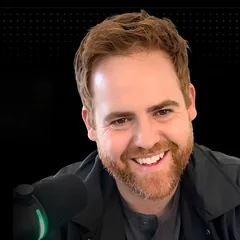
Juanjo Mestre is CEO and co-founder of Dcycle, a company that helps others get a clear picture of their environmental impact in one place, especially their carbon footprint. He started it in Madrid in September 2021 and says it now serves around 2,000 companies. His own description of the job: no normal week, from customer success to client calls to prospecting.
- 65+people at Dcycle, he says3:17
- 3offices: Madrid, London and Munich3:25
- €10Mraised by Dcycle in total, he says: around that3:23
- 2021
Starts Dcycle in September
10:49 - Jan 2022
Joins the Lanzadera accelerator, three or four months in
11:21 - Jun 2022
Signs a 1 million euro pre-seed round with four Spanish funds
10:55 - Later
Raises a Series A after two close investors say it is time
23:21 - Today
CEO of Dcycle, with offices in Madrid, London and Munich
3:25
Startup Fundraising Strategy: A Series A Without Pitching 100 Investors
Juanjo Mestre, CEO and co-founder of Dcycle, describes a startup fundraising strategy built on relationships: his Series A started with four or five investors the team had talked to for almost a year, and two of them suggested it was the right time to raise. Before that, Dcycle raised 1 million euros of pre-seed funding after joining an accelerator.
Host Niclas Schlopsna introduces Dcycle as a company that helps others get a clear picture of their environmental impact in one place, especially their carbon footprint. Juanjo says it serves around 2,000 companies and has over 65 people.
The host puts the latest round at a 6 million Series A, with no currency, when he asks Juanjo to confirm the company's facts. Juanjo answers with the total instead: around 10 million euros raised.
Can a startup fundraising strategy work without pitching 100 investors?
For Dcycle's Series A, it did. The host asks whether investors wanted to see anything specific, such as one slide or a moat, and Juanjo starts with how the round came about.
“We weren't out there pitching to 100 investors. We just pitched it to four, five investors that were truly close, that we've been talking for a while.”
The team had been talking to them for almost a year, he says, building a relationship on the personal side to see whether they could be a good fit at some point.
Dcycle wasn't looking to raise. Then two of the five investors told the team it was the right time to run a round and get to the next point. In his words, "it was their initiative."
- Step 1: Get to know a few close investors
Four or five of them, people the team had been talking to for almost a year.
23:06 - Step 2: Build the relationship, not a round
Getting to know them on the personal side, to see if they could be a good fit at some point.
23:10 - Step 3: Let them start the conversation
Two of the five said it was the right time to run a round. It was their initiative.
23:20 - Step 4: Know what they saw
In his view, a growth rate that was really good and a market that was expanding.
23:33
Juanjo Mestre on Deal Makers (& Fakers), 22:56 to 24:05
Florian Myter went wider on his own episode: he contacted about 60 angels and VCs over six to eight months for his seed round.
What did Series A investors see in the company?
Juanjo thinks the investors saw two things. The first was the growth rate: the company was growing at a high speed. The second was the market, huge and expanding at that point.
If the team could turn everything it had done into a playbook, he says, the market and the opportunity could be amazing. His summary of what they saw: "our growth rate correlating with the expansion of our market."
He gives no annual recurring revenue (ARR), growth figure or valuation for this round. For benchmarks on numbers like these, spectup's guide to Series A traction metrics lists 7 of them and a checklist.
What can you show for pre-seed funding at 70K ARR?
Back to the first round: Dcycle started in September 2021 and signed it by June 2022, Juanjo says. He puts the pre-seed funding at 1 million euros from four Spanish venture capital funds, raised at around 70K ARR "or something like that."
Asked about traction, he describes the position at closing:
- Revenue: around 70K ARR.
- Clients: around 25, who were pretty happy with the solution.
- Team: three people, just getting started.
- Build time: four or six months to build a product and get its first customers and first revenues, without knowing how to charge or how to price.
What it could show investors, he says, was that it had found something valuable.
“We could showcase that this was the spark of something that could be bigger.”
Can a startup accelerator's main sponsor lead your first round?
The pre-seed shows how a startup fundraising strategy can run through an accelerator. Dcycle got into Lanzadera in January 2022, three or four months after the start, and Juanjo thinks it is the best startup accelerator in Spain and southern Europe.
Once Dcycle was in the programme, the accelerator's main sponsor decided to lead the round. It called its two or three main colleagues, also the main pre-seed VCs in Spain, and together they took the whole round.
He calls the raise "somehow easy" and gives the reasons. In early 2022 ESG software was at its peak, a super hot market, even though the founders weren't experienced entrepreneurs. The team was also starting to show it could hit revenue, and clients were happy with the product.
Fundraising is always stressful, he adds, because you are evaluating your project and yourself. The host's own picture is a roller coaster: positive first conversations, and then investors who still ghost you, maybe even after the second or third call.
On another episode, Jessica Liew describes how she used Crunchbase deal histories to find a co-investor, one that had already done a deal with her lead.
Why do companies have to do ESG reporting?
ESG reporting, in Juanjo's description, covers the non-financial information companies need to disclose to clients, investors or regulators, and that data sits scattered across teams and systems. Dcycle built one workspace where people put in pieces of data and pull them out for any report a stakeholder needs.
He names three forces behind it:
- Regulation: new laws in California, New York State, the UK and the EU.
- The market: clients are asked by their own clients to disclose non-financial information.
- Investors and funders: they request the data to gain control over their investments, and he points to correlations: companies with better non-financial performance management, he says, perform better.
Is raising money harder now?
Juanjo's answer: "I don't think it's harder if you get the right metrics, so you're in the right position." Growth and customer happiness are still relevant, he adds.
What has changed is how Dcycle is judged. It is not evaluated in the same way as before, he says: it has to demonstrate a lot, and potential alone isn't enough. He cites a major step back on regulations in Europe and a very different outlook for the market.
He can't tell whether that or Dcycle's own stage explains why investors now look at other things.
His summary is that the stage itself is harder, but raising capital is not. The world is in a complete transformation through AI, new regulations and new operating models, and if you can show you are surfing that wave, raising isn't harder.
Series A vs Series B funding: how does a startup fundraising strategy change?
Dcycle hasn't raised a Series B yet. Juanjo says the company will go for it in a couple of months, and that he is "not really involved right now in the Series B pitching."
The host's own view is that the Series B story changes: it is about scalability, the return and exit strategies. On Series A vs Series B funding, Juanjo frames the difference as what gets validated.
“What I can see on the Series B is that it is more related to validating your playbooks than validating that you can build a playbook.”
At Series A, he says, Dcycle validated some part of the market and the open question was whether it was ready to turn what it captures into a predictable playbook. At Series B the test moves to its own playbooks: the sales playbook, the growth or client expansion playbook and the product playbook.
- What gets validatedSeries A: Some part of the marketSeries B: His own playbooks: sales, growth or client expansion, and product
- The questionSeries A: Are we ready to turn what we capture into a predictable playbook?Series B: Are we ready to scale or aren't we ready?
- Where Dcycle standsSeries A: RaisedSeries B: Not yet: it will go for it in a couple of months
Juanjo Mestre on Deal Makers (& Fakers), 15:54 to 17:40
In his view, scalability is related to a predictable playbook and great leaders who can implement it. A good playbook plus a great manager to run it, he says, makes a company ready for Series B, though he calls that just his opinion.
Is there an ARR at which you have product-market fit?
Juanjo names no ARR at which a company has product-market fit, because the target moves each time you reach it.
He saw the same with the milestone for a real company: when he and a friend, also an entrepreneur, were starting up, they said they would have a company at the first million of revenue. After the first million they set the bar at two million, after the second at four.
Product-market fit works that way too, he says. At 100K ARR you are told it comes at 1 million euros ARR; at 1 million ARR, they say 5 million; at 5 million ARR, they say 20 million.
Juanjo Mestre on Deal Makers (& Fakers), at 9:32
He calls it more like the holy grail: the team doesn't know what it is pursuing, only that it is in constant evolution and constant search of what it can do. Right now he feels Dcycle is at 2% or 3% of what it can do.
Why do European startups look to the US?
Host Niclas Schlopsna says he sees many European companies raise up to a Series A and then move to the US, because the infrastructure and the big Series B and Series C investors there require it. He asks whether Juanjo Mestre thought about moving the entity.
Juanjo calls it a tricky question and answers for European companies in general. He says to be realistic about exits: the biggest exits have been made in the US, which has bigger companies and more big acquirers than Europe.
The US also has stronger exchanges, and he says that if a US IPO is smarter for a company's investors and shareholders, the duty is to aim for it.
Another founder, Emanuela Maggioni, says on her own episode that she would consider relocating her company to the US if an investor asked.
What should founders build for 2027?
The host asks what advice he has for founders building a software as a service company. Juanjo's answer is about the product.
“The best piece of advice I could truly honestly give is build the software that would be needed in 2027.”
The world is changing fast, he says, and so is how people consume software: he sees his own habits shifting every day.
His test is to ask whether what you are building is agent first or agent ready, CLI first or CLI ready, or UI ready. What wins in a couple of years is what is needed then, and building software as if it were 2024 is, in his words, "a big mistake."
What can a founder take from these two rounds?
The pre-seed came through an accelerator's main sponsor, in an early-2022 market Juanjo calls super hot for ESG software. The Series A came from investors the team had known for almost a year, two of whom started the round. It is one founder's account, and he gives no general rule for a startup fundraising strategy.
Asked which slide in a deck matters most, he names the one on "how we're building a different thing and why our software is truly needed," an existential piece for companies.
The step a founder can copy is the one Juanjo describes: talking to a few close investors on the personal side for almost a year, with no round in mind.
Asked and answered.
5 questions this conversation answers, in plain words.
Dcycle hasn't raised a Series B yet, so Juanjo Mestre has no Series B round to describe; he says the company will go for it in a couple of months. His view on raising in general is that he doesn't think it is harder if you have the right metrics, and that Series B is about validating your own playbooks (sales, growth or client expansion, and product) with great leaders to run them.
For Dcycle's pre-seed, the route was an accelerator: after joining the Lanzadera accelerator, its main sponsor led the round and brought in its two or three main colleagues, the main pre-seed VCs in Spain. The Series A investors were people the team had talked to for almost a year before any round started.
Juanjo Mestre pitched four or five, all of them close to the company after almost a year of conversations. Two of the five said it was the right time to raise, so the round started on their initiative. It is one founder's startup fundraising strategy, and he gives no general number.
Juanjo Mestre names no ARR at which it exists. The goalpost keeps moving, he says: at 100K ARR you are told it comes at 1 million euros ARR, at 1 million ARR they say 5 million, at 5 million ARR they say 20 million. He calls it more like the holy grail and feels Dcycle is at 2% or 3% of what it can do.
Juanjo Mestre says the most important slide is the one on how Dcycle is building something different and why its software is needed, an existential piece for companies. The host had floated a moat slide or one with happy clients; Juanjo named neither.
Talk to Juanjo, or keep listening.
What the host says at the end of the episode, and where to hear more.
- For investorsReach out to Juanjo directly
The host closes by saying that an institutional investor who is interested in the opportunity can reach out to Juanjo directly.
Said at 26:52Open his LinkedIn profile - The companyLook at what Dcycle does
The host says he will link all of Juanjo's company channels with the episode.
Said at 26:47Visit dcycle.io - The showFollow Deal Makers (& Fakers)
Follow the show to hear the next episode as soon as it is out.
Follow on Spotify