Jessica Liew: She Raised $1M Pre-Seed in Berlin
Key points: Said at the table.
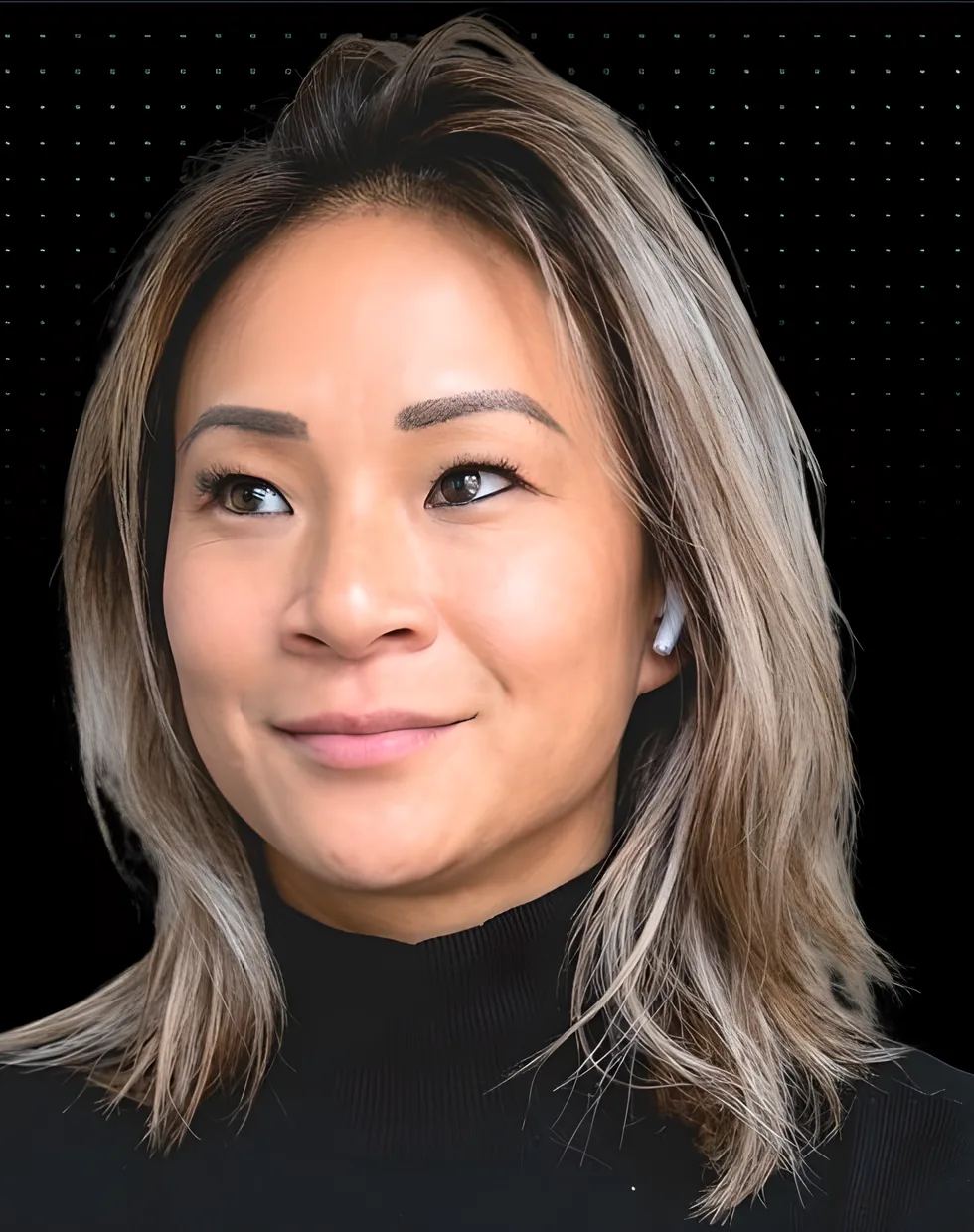
Who is Jessica Liew?
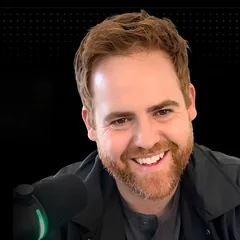
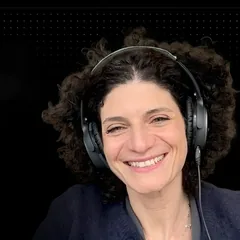
Jessica Liew is the CEO and founder of Intriq, which builds autonomous AI agents for the consulting industry, mostly around consulting firms' client data. She is originally from Silicon Valley and has lived in Europe for over 10 years. Her last job before Intriq was in private equity, where she was the only woman on a team of over 100 men. In the episode she walks through Intriq's pre-seed round.
- 10+years living in Europe, though she is originally from Silicon Valley22:04
- 100+men on her last private equity team, where she was the only woman26:49
- Solofemale founder, building where finance meets tech26:15
- Early on
Grows up in Silicon Valley, where her father worked
21:58 - Last job
Works in private equity, the only woman on a team of over 100 men
26:49 - 2025
Raises Intriq's pre-seed round, with the seed planned for around Q2 of next year
2:23 - Today
CEO and founder of Intriq, building AI agents for consulting firms
1:28
Pre-Seed Fundraising: How One Founder Closed Her First Round
Jessica Liew, founder of Intriq, thinks her pre-seed fundraising took somewhere between two and three months. It was her first institutional round, meaning money from professional investors, and she says it began with a scattershot approach that was not targeted enough.
In her words, Intriq builds autonomous AI agents for the consulting industry, mostly around consulting firms' client data. Jessica tells host Niclas Schlopsna how the round ran, how she filled it and what she is doing before the next one.
How long does pre-seed fundraising take for a first round?
Jessica Liew thinks the round took somewhere between two and three months in the end. It felt longer than the team had hoped. She does not say when the clock started.
Niclas Schlopsna calls two to three months a very good timeline. He says founders typically raise for far longer, depending on the business and the industry, but gives no figure. Florian Myter, a founder on another episode, says his seed round took six to eight months.
How do you approach pre-seed investors without wasting time?
How the team started isn't how Jessica Liew would start again. They began with a scattershot approach, and the mistake, she says, was not being targeted enough very early on.
She sees founders make the same mistake now. In the week of the recording a founder asked her for an introduction to an investor, and after two seconds with the deck she thought the investor would never look at that founder.
Her advice on how to approach investors is to do the homework: speaking to investors whose thesis doesn't fit wastes a lot of time, and their no is about what they invest in.
At Slush in Helsinki, host Niclas Schlopsna says, an investor at a traditional German bank told him that a founder building medical packaging approached him because of his big investor badge. The bank's team has a fintech background and focuses mainly on Series A, so the pitch never fit.
Jessica says the team went through a period of doing the same: anyone with an investor badge was probably someone they would speak to.
Are warm introductions better than cold outreach?
Jessica Liew's first meetings in pre-seed fundraising came from a mix: introductions from both investors and founders, plus some cold outbound.
“We were always told warm introductions are better than cold outreach. I don't necessarily agree with that. One of our larger investors is actually a cold outreach from being super, super targeted.”
That investor is a family office, which invests a wealthy family's money. She approached it late in the round, as a co-investor alongside her lead investor (the investor leading the round), because she saw it had done one deal with that lead before.
Niclas Schlopsna found it interesting that a family office came through cold outreach: he had thought family offices were more conservative and spoke more to people from their network than VCs, who look at all the deals.
Jessica says whether warm or cold works also depends on the investor, a VC or a family office.
Florian Myter contacted a good 60 angels and VCs, mostly by cold outreach, and the VC he raised his seed round with came through a warm introduction.
How do you find co-investors in pre-seed fundraising?
Near the end of its pre-seed fundraising the team had to fill the round. Jessica Liew says they needed someone to co-invest with their current investors, and that the dynamic between who co-invests with whom isn't spoken about a ton.
To find a co-investor she spent all her time on Crunchbase, where she could see how those deal dynamics played out. She worked like this:
- Step 2: Open their specific deals
Look at one deal, say a company in your industry or a closely related one.
12:14 - Step 4: Read each investor's deal history
The size of the deals, the industries and whether they backed someone in the same space.
11:38 - Step 5: Look for a past deal with your lead
This investor had done one deal with Intriq's lead before, which is why she reached out.
11:01
Jessica Liew on Deal Makers (& Fakers), 11:01 to 12:38
She adds that an investor might call itself pre-seed or early stage and not be, and its real sweet spot is hard to know before you can ask them the questions.
Niclas Schlopsna calls clicking through the deals with no filter super time consuming and says it's exactly how it should happen.
She thinks reaching out to that family office was one of the best moves the team made in the round.
What matters most in an investor meeting?
Asked for the most critical question in the first sessions of pre-seed fundraising, Jessica Liew named none and pointed to her energy and the story around the startup: what the team is building and how it came to the problem. When she sometimes stuck to the script and didn't allow herself to shine, she thinks, it hindered her from showing her enthusiasm and passion.
“If I can just let my hair down and just let my energy shine, that's really what made a difference.”
Her energy, she thinks, came across much better in the few in-person meetings than online. A shared connection with an investor can help too, she thinks, because it opens a more personal dialogue.
Niclas Schlopsna says that at this stage investors tend to back the people and not the product, because they feel the energy and the energy shows whether a founder can execute. Jessica adds that pivots are expected, so it's sometimes more about the founding team than the idea itself.
How many investor conversations come before a term sheet?
Jessica Liew wants to say four or five conversations with her lead investor in the pre-seed fundraising came before a term sheet, the written offer that sets out a round's terms, and adds that it felt like a long time ago. With other people joining the conversations she puts it at maybe around five. It was near the holiday period, which she calls tricky.
The host describes the usual path with VCs: you often start with an analyst or associate and go up to the partner, speaking to several partners. Her round followed that path, and the team started with an associate and worked its way up.
Another founder, Kirk Donohoe, recalls maybe two or three calls with his first investor before a pre-seed term sheet.
A guide to a startup term sheet, its binding clauses and red flags covers what comes next.
What should you do between a pre-seed round and a seed round?
Jessica Liew recorded the episode in 2025 and planned the seed round for about Q2 2026. With pre-seed fundraising done, she is laying the groundwork in several ways:
- A few investor conversations each week to keep them warm.
- A newsletter sent out regularly so investors are up to date.
- New investors, through pitch events all the way up until Christmas and events in San Francisco.
- Customers and growth, because, she thinks, a big part of the fundraise is hitting the targets she's looking to hit.
- The story for the seed raise: what the company achieved between pre-seed and seed.
She also uses her investor conversations as an informational dialogue: she asks what investors see in the market and what they've been investing in lately, and doesn't pitch the whole time.
Niclas Schlopsna says the next round looks different, because investors want to see what happened since the last one: how the product looks, scalability and go-to-market.
Jessica, who comes from private equity, is excited for rounds that are more about metrics.
“It actually used to drive me crazy that we're fundraising with no numbers.”
How different is raising from US and European investors?
On fund size, Jessica Liew says, in her personal opinion, a big fund in Europe might be a few hundred million, while in the US it's billions. Her reasoning is that it's hard enough to be a founder at this stage, so she heads where the funds are bigger. She's having a lot of conversations in the US now, and some in Europe too.
She is originally from Silicon Valley and has lived in Europe for more than 10 years. People have told her she's absolutely crazy for doing this in Europe, and for the longest time she was set on building there.
Now she sees more traction on the customer side in the US, especially with AI. Selling AI to customers meets a bit of skepticism, she says: people wonder whether it's proven and how they can trust it. In the US, after a bit of cold outbound, customers sign up for a pilot on the first call, which she calls night and day.
Niclas Schlopsna sees differences in the risk investors want to take. In Germany, he says, it's all about traction: which clients you have and what annual revenue you generate. In the US you need a strong story and a validated product before you can speak to the first investors.
- A big VC fundEurope: A few hundred millionUS: Billions
- AI customersEurope: A bit of skepticism: is it proven, can I trust it?US: A pilot signed on the first call, after a bit of cold outbound
- Investors, per the hostEurope: In Germany it is all about traction: clients and annual revenueUS: A strong story and a validated product first
Jessica Liew and Niclas Schlopsna on Deal Makers (& Fakers), 22:23 to 24:08
How does one female founder see the funding gap?
Asked by the host about the female founders funding gap, Jessica Liew says she tries not to make it a challenge, keeps a positive mindset and thinks about how to use it to her advantage. She does not say fundraising was harder for her.
She is a solo female founder building at the intersection of finance and tech, two male-dominated industries. She thinks the biases are very real, and the example she gives is comments she gets as CEO that she wonders would differ if she were not a woman. In her last job in private equity she was the only woman on a team of more than 100 men.
She also made an observation the host said he had never heard before: funds that were female focused were some of the hardest to work with in due diligence, and she would rather work with some of the funds that had no such focus. She doesn't know why, and adds that this may just reflect the select group of investors she pitched at the time.
On female founders funding, Emanuela Maggioni, a founder on another episode, says a female founder has to show and prove much more after her third fundraising.
What is the one piece of advice for closing a funding round?
Asked what founders should do to close a funding round, Jessica Liew's one piece of advice for pre-seed fundraising is being focused and targeted around the investors you speak to.
Whenever she gets an investor name, she still puts it into ChatGPT and asks for a profile of that investor, because she thinks the legwork is so insanely important. When the round had to close, she says, it felt like being on a game show and trying to solve a Rubik's Cube in something like 30 seconds.
“If it wasn't for us just being so insanely targeted, I don't know if that round would have closed.”
Asked and answered.
6 questions this conversation answers, in plain words.
Jessica Liew thinks her first institutional round took somewhere between two and three months, and says it felt longer than the team had hoped. She does not say when the clock started. Host Niclas Schlopsna calls that a very good timeline, because he sees founders typically raise for far longer, depending on the business and the industry.
Jessica Liew's answer is to be targeted and do the homework on what each investor invests in. Her first meetings came from introductions by investors and founders plus some cold outbound. She still asks ChatGPT for a profile of every investor name she is given.
Yes, in Jessica Liew's round: one of her larger investors, a family office, came from cold outreach, late in the round and as a co-investor, after she saw it had done one deal with her lead investor. Warm or cold also depends on the investor, she adds.
Jessica Liew spent all her time on Crunchbase. She might start with a well known investor in her field, looked at that investor's specific deals, clicked into a deal and checked which other investors were involved. She also read each investor's deal history for deal size, industries and companies in the same space. She clicked through the deals without a filter, which the host calls super time consuming and exactly how it should happen.
Jessica Liew wants to say four or five conversations with her lead investor came before a term sheet, maybe around five once others joined. She says it felt like a long time ago and was near the holiday period, which she calls tricky. The team started with an associate and worked its way up.
Jessica Liew tries not to make it a challenge and keeps a positive mindset, and she does not say fundraising was harder for her. She thinks the biases are very real, citing comments she gets as CEO. She also found some female-focused funds among the hardest to work with in due diligence, and says that may reflect the select group of investors she pitched.
Talk to Jessica, or keep listening.
Three things the episode asks you to do once it ends.
- For investorsReach out to Jessica on LinkedIn
Niclas Schlopsna ends the episode by saying that any investor who wants to speak to Jess should reach out to her on LinkedIn.
Said at 29:57Open her LinkedIn profile - The showFollow Deal Makers (& Fakers)
The host asks you to follow the show so you don't miss the next deal story, and to share the episode with a founder or investor who needs to hear it.
Said at 30:44Follow on Spotify - Fundraising supportGearing up for a serious raise?
The host says the spectup team supports founders with their decks, numbers, strategy and investor outreach.
Said at 30:52Visit spectup.com