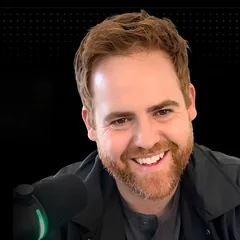
Florian Myter: €75 MRR, 3 Customers, Then Figma Pivoted Him to €1.2M
Key points: Said at the table.
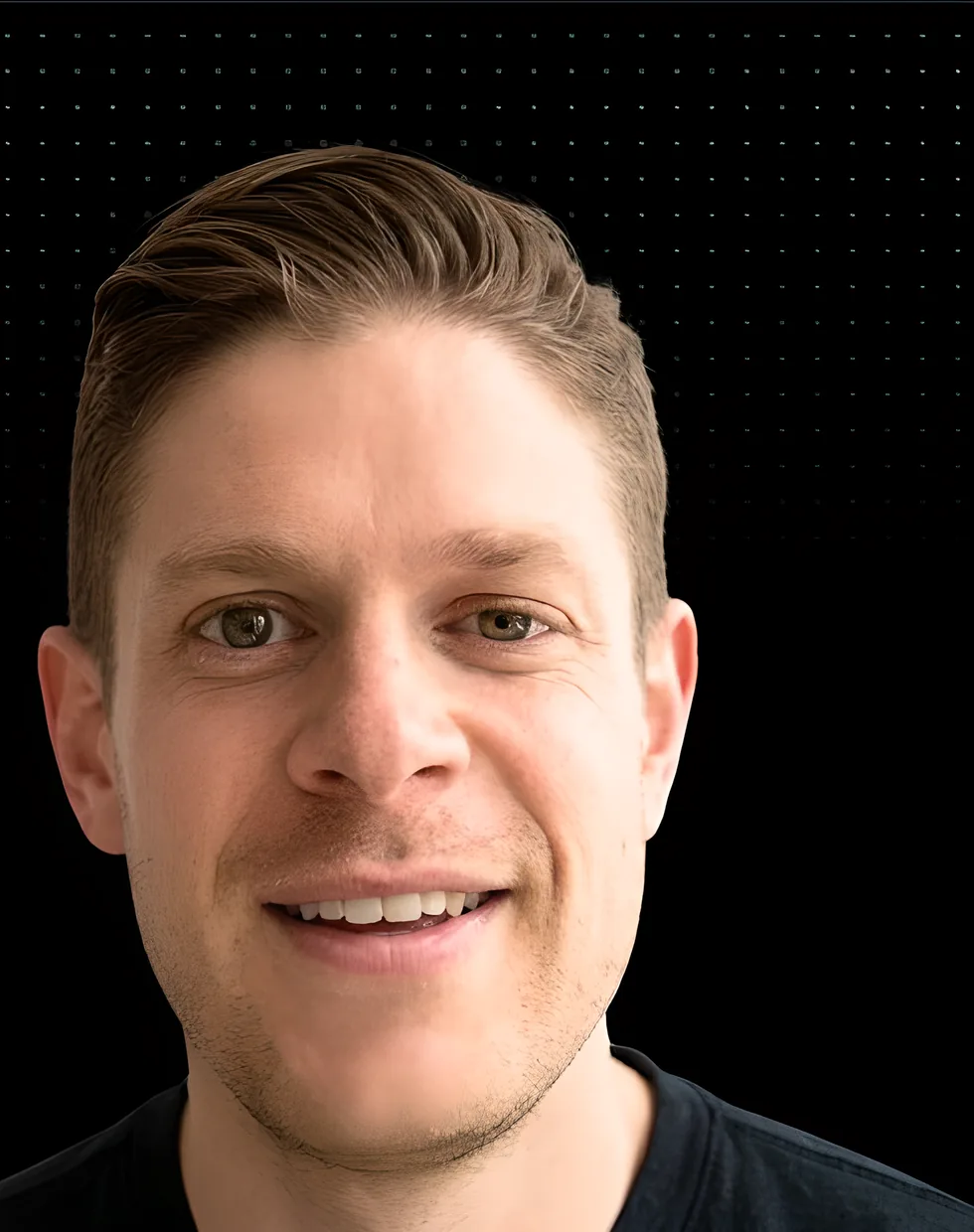
Who is Florian Myter?
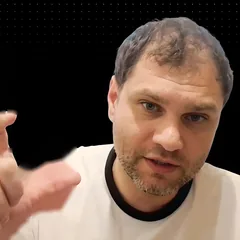
Florian Myter is co-founder and CEO of Weavely, a Belgian AI form builder that generates forms from a single prompt. He holds a PhD on data replication in distributed systems, and Weavely began as a university spinoff built on his co-founder's research. He used to do the selling himself and now works on product-led growth instead.
- PhDhis own, on data replication in distributed systems3:46
- 2022the year he and his co-founder started, as he puts it: "we've been at it since 2022"2:08
- 4people on the team now, which he calls very lean2:08
- PhD
Does a PhD on data replication in distributed systems
3:46 - 2022
Starts Weavely as a university spinoff, on his co-founder's computer science research
2:08 - First product
Starts in the Figma ecosystem, turning designs into full stack web apps for prototyping
4:20 - The pivot
Follows the 30% of users who were building forms and moves to an AI form builder
4:41 - Today
Runs Weavely as co-founder and CEO, now on product-led growth and SEO instead of sales
2:50
When to Pivot a Startup: 15,000 Users, 400 Monthly Active
When to pivot a startup? Florian Myter, co-founder and CEO of Weavely, a Belgian AI form builder, names no fixed threshold. He points to the numbers behind the decision (15,000 users, only 400 of them monthly active) and to the event that made the pivot unavoidable.
Weavely is a university spinoff, built on his co-founder's PhD research, and it began with technology that turned Figma designs into full-stack web applications for prototyping. It raised a pre-seed on that idea, pivoted, and raised a seed on the AI form builder.
When to pivot a startup, and which numbers gave it away?
Florian says the writing was already on the wall when Weavely decided to pivot. The company had a good 15,000 users, people plugging into Figma, but only 400 were monthly active, a ratio he calls not great. Revenue wasn't great either: about 75 euros of MRR.
His diagnosis was the product. It was too complicated, and the company wasn't able to deliver on the value proposition of getting higher-fidelity prototypes.
What event made the startup pivot unavoidable?
The pivot became unavoidable, Florian says, at Figma's yearly conference, Config, where Figma announced a whole bunch of new features. A good half of them sat directly in Weavely's value proposition. His verdict on what was left: it "could be a nice coding side project or it could be a nice lifestyle business, but not a VC fundable company."
A good 30% of Weavely's users were building forms and surveys with it. That struck the team as odd, with so many form builders and survey tools around.
They investigated why and found that the GPT integration they already had, generating forms from a prompt, was what got people going. That was at the very start of the GPT launch, so they decided to build an AI-native form tool.
Florian calls the timing lucky: most people don't have that one pivot moment, and without the conference, he says, Weavely might have dragged on for another year and a half and run out of money.
When to pivot a startup: how early should a founder kill their darlings?
His rule on pivot or persevere:
“You should be able to kill your darlings. I think that's the most important thing.”
The opposite mistake is stopping too soon: you have to give the baby a chance to grow. What keeps people waiting, in his view, is the sunk cost fallacy: they invest so much in software that they wait way too long to say it isn't working.
The fix: set the right KPIs in the beginning, so you can measure whether you hit a target by a given date and stop the thing altogether if you don't.
By his estimate, it took Weavely a year to a year and a half to realize the prototyping product wasn't working. In hindsight the pivot should have come earlier, he says, but it wasn't too late: the company is still here and raised a follow-up round.
The pivot also changed his own job. He went from cold outreach and demos to marketing for a product-led movement, SEO included, and says he does no sales anymore.
Especially with AI today, he thinks the venture studio model beats what Weavely did, which was one startup: find a team, have it test 10 different things and run with whatever wins. His version of the gate is a goal metric for each idea. If an idea reaches it, it goes to stage two, and you kill whatever doesn't work, however lovely the problem or the solution looks.
Host Niclas Schlopsna says he believes, from the concept and the success rate, that studios are more successful just because of their process.
Another guest saw a startup pivot from the mentor's chair: how N26 started as Papaya, a credit card for teenagers, and became Number 26, in Christian Rebernik's telling.
How do you tell investors you are pivoting?
Host Niclas Schlopsna calls the psychology of deciding when to pivot a startup difficult: by then money has been wasted, promises were made to the pre-seed investors and the story was told in public.
Florian's version of how to tell investors you are pivoting was an honest discussion with the investors. He told them what had just happened and put two options on the table: stop, and they get back the money that is still left, or go in a new direction.
For the second option, he ran a sort of mini funding round with the existing investors. It was a pitch: the forms-and-surveys signal, an idea of what Weavely could do and an idea of the market.
The investors had backed Weavely mostly for the team, and in his telling they put it this way: "I prefer that you run and that you try this out than to give us our money back."
How does a founder leaving a university raise a pre-seed round?
How a spinoff raises depends on the country, and Florian says he can only speak for Belgium. There, universities are investing more in spinoffs, and a researcher doesn't own the IP of a PhD. In software, where a PhD is typically one person's well-delimited work, the university sometimes takes part of the shares, case by case.
Florian's route began with a right of first negotiation: a VC linked to the universities holds it on spinoffs, so a founder gets one warm introduction to an established VC. It isn't free money: it is still a traditional VC.
“You're a bunch of people that don't know each other, you don't have a product, you don't have any revenue, you don't even have a company yet because you haven't spun off yet, and so trust is a big thing.”
He started talking to that VC a good six to eight months before the spinoff, just to build up trust. Once one VC is on board, he adds, it is easier to get an institutional fund to co-invest for a smaller amount.
The pre-seed came before the pivot. It was a convertible loan on the prototyping idea, raised before the product was on the market, on market research, conversations with prospective users and the technology from the university spinoff.
Emanuela Maggioni runs a UCL spin-out and describes the same slow start: how her main VC met her a year before investing.
For founders without a university fund, a guide to getting warm introductions to investors covers which introducers carry weight and when to ask.
What should you tell your investors when the quarter went badly?
Florian sends an update every quarter to every investor who seemed interested in a follow-up round. During the pre-seed talks, he thinks, the emails went out every two weeks or every month. Each one covered:
- what the company did to advance since the last email;
- what it still had to do;
- where the company wanted to be next month or in two months.
Today's quarterly update says where the company is, what the challenges are and what he wants to fix. Most investors don't reply.
Florian hears indirectly that many read the updates and know about Weavely. That builds trust, he says, because you have nothing to hide, and the same habit helped Weavely raise the pre-seed round.
Sending updates gets hard when you're hitting your face into the wall quarter after quarter. He has to tell investors he didn't manage what he wrote in the last email, which he calls almost a bit shameful.
Even then, the part that counts is the consistency, together with being able to say "this didn't work, I think it's this reason, and we're going to do that to help fix it."
Niclas calls investor updates pure gold and says investors want founders who are transparent and learn from it. Share even the bad ones, he says: there is no point hiding what went wrong, because if investors come in it shows up in due diligence, and if they don't you have lost nothing; a missed goal is just truth.
How long does a seed round take, and how many investors do you contact?
Raising the seed was a different problem from deciding when to pivot a startup: Florian raised it on an MVP of the form builder. Niclas put the seed at around 900k euros, announced in August 2024, and Florian confirms it. Across the pre-seed and the seed, Weavely has raised 1.2 million euros in total.
The seed took a good six to eight months to close, never full time, because a founder still has everything else to do. He loses focus at some point once raising starts: there are only 24 hours in a day.
The funnel, in his numbers: he contacted a good 60 people, a mix of angels and VCs, mainly by cold outreach, and must have pitched a good 10 to 15 of them. At some point he was able to informally agree on a round with, as he remembers it, three angels, one accelerator and one VC. The existing VC said they would co-invest again if he pulled the round off.
Florian Myter on Deal Makers (& Fakers), at 28:57
In the end, the existing investors plus one new investor wanted to take the entire round, because the angels would only add dilution. Florian had to hold hard discussions with the angels and the accelerator and cut the ties, though he stays in touch with them. The new investor came through a warm introduction again, which he says shows the power of warm intros.
As with the pre-seed, a couple of months passed between getting in touch and raising: investors want to see where you were when you started talking, where you are today and what is and isn't going right.
Jessica Liew, closing a round of her own, explains how she scoured Crunchbase for a co-investor and found one that had done a deal with her lead before.
What is a moat in startups, and what if an investor calls yours thin?
Asked for the hardest objection he faced, Florian says it was hard because it was completely fair: a VC said Weavely's market was too competitive. When a VC asked what the moat was, he answered candidly:
“I'll be fair with you. The moat is very thin. We are in a super competitive space, but we believe that there's still room for an additional player.”
The pitch that followed was that Weavely has a team able to set up a go-to-market machine, a product-led growth machine. He says that convinced his existing investors, who knew it was a very competitive space with many established players. It goes both ways: a founder needs investors who match the company being built, and he understands the VCs who passed on it.
What is a moat in startups? Florian splits it into two levels that a founder has to be transparent about when raising: the short-term one, and the one that has to hold in five years.
- The investor's questionShort-term moat: If some kid vibe-codes this tomorrow, why wouldn't he be a valid competitor?Long-term moat: In five years, why will you still be around?
- What protects youShort-term moat: A marketing machine, which he says is maybe even more complicated to buildLong-term moat: Something fenced off, like proprietary data or a patented algorithm
- His viewShort-term moat: You can't launch a new form builder and expect a thousand users tomorrow: they need to find youLong-term moat: For all the rest, nobody knows what it will look like in five years
Florian Myter on Deal Makers (& Fakers), 33:23 to 34:27
The long-term moat is the harder question, and Florian asks who can still project themselves five years down the road. Niclas adds that a moat slide is now typically one of the most important slides in a pitch deck, where a couple of years ago, he thinks, his first decks didn't include one.
What should a founder do once they know when to pivot a startup?
After the Figma announcement, Florian's answer was a short sequence, in this order.
- Step 2: Put two options on the table
Either stop and the investors get back the money that is still left, or find out what else the company could do.
16:03 - Step 4: Pitch a mini funding round
To the existing investors: an idea of what to build and an idea of the market.
16:26 - Step 5: Hear the answer
They had invested mostly because of the team: if you think you can pull this off, just run.
16:35
Florian Myter on Deal Makers (& Fakers), 16:02 to 16:39 and 29:35
One habit ran alongside all of it: Florian still sends quarterly updates to interested investors, including the ones where he has to report goals he missed.
His advice to people in a similar situation is to focus on what you can control, filter out the noise and stay nimble enough to change trajectory, and at some point to get your head down, build and talk to customers.
Asked and answered.
6 questions this conversation answers, in plain words.
Florian Myter names no fixed threshold, but he points to what told Weavely: 15,000 users with only 400 monthly active, about 75 euros of MRR and a product that was too complicated. The event that made it unavoidable was Figma's yearly conference, where a good half of the announced features landed directly in Weavely's value proposition. His advice is to set the right KPIs at the start, so you can measure whether you hit a target by a given date and stop if you don't.
Florian Myter says he has never felt that building and raising from Belgium was a disadvantage compared to any other place in the world. About 98% of Weavely's users are outside Belgium, because a small country forces a company to go global, and he calls the Ghent scene booming. A US round would probably have brought an extra zero on the valuation and on the money, but he asks whether it would have helped fundamentally: his answer is that you burn more, and at best you go faster.
Traction, and what the founder still needs to learn: in Florian's words, the two most important things to show. One or two people who vouch for the problem are worth a thousand times more than a prototype nobody has used. He says not to sweat tiny details or product decisions before you have users, and since he raised his pre-seed before the AI tools, he thinks go-to-market and the problem now matter more than the MVP.
An entire VC team in which nobody ever built a business, says Florian. Founders need people who can help them grow in the beginning, and without anyone on the team or the advisory board who went through what they're going through, they make it harder on themselves than they need to.
Both, according to Florian. Academics are used to rejection from writing papers and doing research, where you fail more than you win, so most are tenacious. The disadvantage is that they overestimate the importance of engineering and over-engineer, waiting for things to be perfect before they ship.
Probably in Q2 2027, Florian says. He plans an A round, so the raise itself starts at the end of 2026 or the beginning of 2027.
Talk to Florian, or keep listening.
One ask from the end of the episode, and two ways to carry on.
- For investorsReach out to Florian directly
Niclas Schlopsna says investors listening can reach out to Florian directly, and Florian says he is up for it, with coffees as the best entry point.
Said at 39:00Open his LinkedIn profile - The showFollow Deal Makers (& Fakers)
The show this episode is part of.
Follow on Spotify - Keep listeningA pivot seen from the mentor's chair
Christian Rebernik on how N26 started as Papaya, a credit card for teenagers, and became Number 26.
Listen to the episode