Dr. Emanuela Maggioni: From Academic Research to €4.5M for AI Scent Tech
Key points: Said at the table.
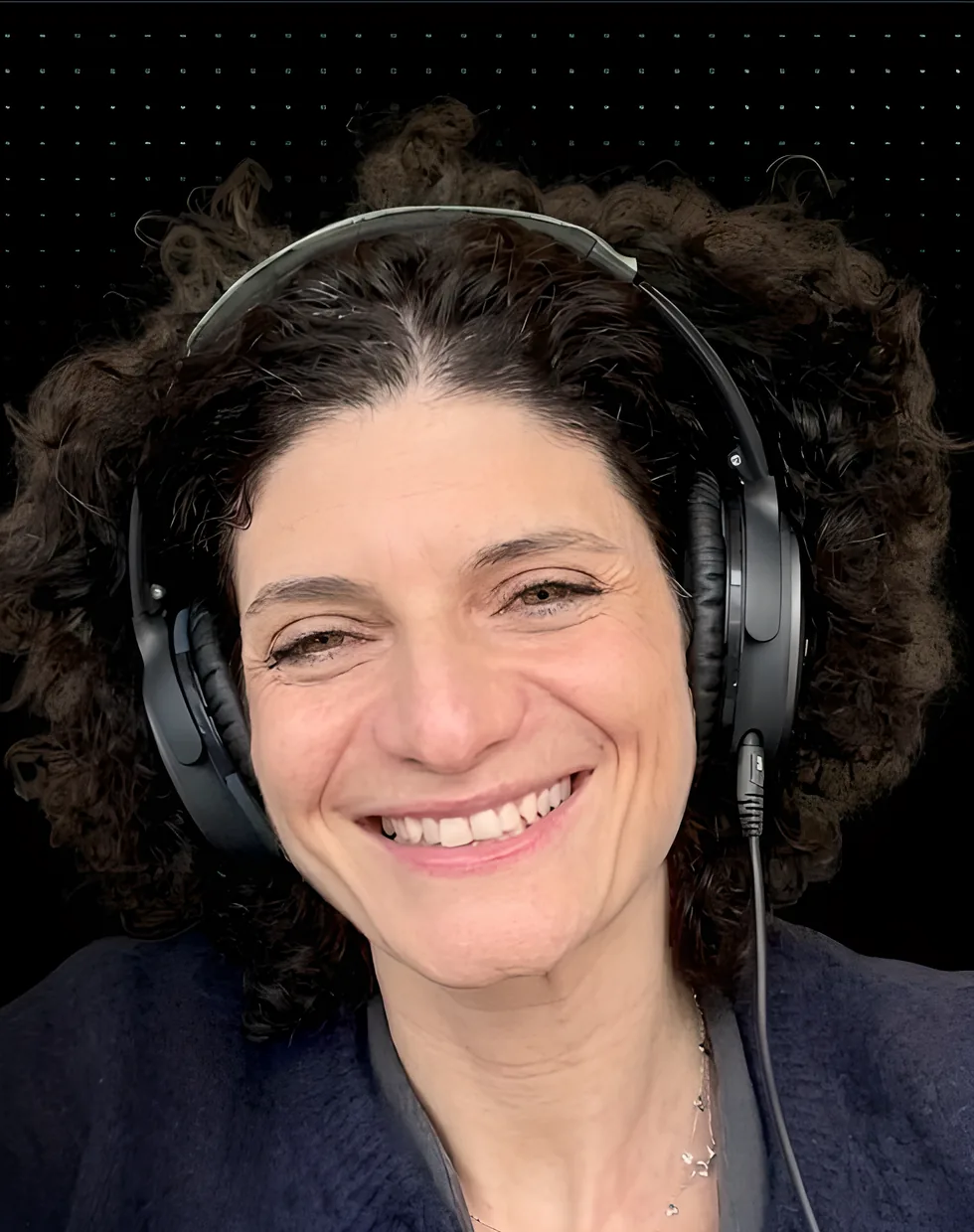
Who is Dr. Emanuela Maggioni?
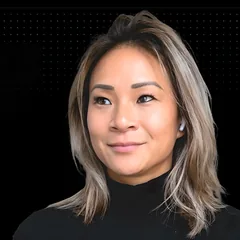
Dr. Emanuela Maggioni is co-founder and CEO of Hynt, which turns sleep data from wearables into scent. She has researched the sense of smell and run experiments since she was 19. A 2018 proof of concept grant and a Royal Academy of Engineering fellowship carried her from academia into the company.
- 20 yearsin sensory science, in the host's question2:23
- 19her age when she started running experiments on smell10:19
- 13people in the Hynt team after the second round27:38
- Age 19
Starts running experiments on the sense of smell
10:19 - Academia
Works at Sussex University, where her co-founder is then her principal investigator
10:31 - 2018
Wins a proof of concept grant of 150,000 pounds, equity free
11:29 - Next
Joins the Royal Academy of Engineering Enterprise Fellowship, paid for a year of entrepreneur training
15:27 - Today
Co-founder and CEO of Hynt, which turns wearables sleep data into scent
3:34
University Spin-Out: How a Researcher Raised 3.9 Million
Dr. Emanuela Maggioni's university spin-out was funded by a mix of grants, angel money and a specialist VC. She is co-founder and CEO of Hynt, and she has raised 3.9 million so far, almost 1 million of it equity free, meaning grants that took no share of the company.
Hynt converts wearables data on sleep into a real-time intervention delivered as scent, and it wants to reach consumers through partnerships with wearables companies in the sleep space. Her route there began with a lunchtime question and a 150,000 pound grant, and it's one worked case for researchers weighing a spin-out company of their own.
How does a university spin-out start?
Asked when the research had to become a company, Dr. Maggioni says there was no specific moment. She has worked on the sense of smell her whole research career, building devices for real-life use and running experiments since she was 19, and the company follows from that.
The turning point came at Sussex University, where her co-founder was then her principal investigator and she was working in another sensory modality, missing smell as a research tool. One lunchtime the question came up whether to apply to a European research scheme called proof of concept and test whether a commercial idea in digitalizing smell could become a spin-out. Her answer was an immediate yes.
“Why not? Because it was just the natural consequence of what I've been doing all my life. So it was an easy step.”
Armon Sharei was heading into a Harvard postdoc while a friend ran his company full time, and he explains why he switched to the company after a year and a half.
What can a proof-of-concept grant pay for?
The proof-of-concept grant that started her research commercialization was won in 2018. It was a lump of 150,000 pounds, completely equity free, as she puts it. It covered:
- The first patent filing.
- Exploring the potential business models.
- A trip to CES, the consumer electronics show in Las Vegas.
- A beta version of everything: a functional device, 3D printed and glued together, plus a software beta.
Big corporates like Sony and Samsung came knocking for demos and talks, which confirmed that an idea built on academic neuroscience wasn't off track, and companies of that kind have stayed in touch.
When the proposal was written there was no real business model, she admits, only a big dream of a standard like Adobe's PDF or Dolby. Today the model is licensing, B2B.
Can a researcher publish before the invention is protected?
Her first plan with her co-founder was to write a paper. Their university technology transfer officer, the university's contact for commercializing research, told them to hold on: no paper, and no showing everything at CES, until the invention was protected.
Dr. Maggioni had never thought about intellectual property: "When you do research you don't think about IP," she says. She hadn't considered that publishing could disclose an invention before it becomes public.
Under the 2018 grant her team filed the patent independently of academia. Moving the IP over from the university she had worked for was, in her words, an interesting and extremely challenging process, because she was formerly an employee. She gives no general rule for who owns the IP in a university spin-out.
Host Niclas Schlopsna gets skeptical when pre-product, pre-revenue founders already show an IP slide, he says: it sends the wrong signal to investors, and he'd focus on the product first.
How does a researcher learn to run a spin-out company?
After that grant she was selected for the Royal Academy of Engineering Enterprise Fellowship, which paid her to be retrained as an entrepreneur and taught her what a commercial model and a business model mean.
When the 12-month fellowship ended, she stopped working in academia and her time moved partly into the company:
- Dr. Maggioni covers both CEO and CTO, and often says no to her co-founder's many requests because they sit outside the budget or the business plan.
- Her co-founder is still a full-time professor at UCL, in the Department of Computer Science, and the company's chief scientific officer. When grants come in, from the European Union or the UK, one day a week of her time goes to bespoke projects inside the business plan.
Dr. Andreas Schmidt applies a test to the CEO question on another episode: a research project isn't a startup when nobody wants to be CEO.
Dr. Maggioni says she has changed: everything the company does is still scientifically driven and proven, but a business needs a compromise at a minimum viable product, because otherwise, she says, "you will spend all your life just reaching the best perfect idea of scientific outcome."
How much did the university spin-out raise, and from whom?
The company has raised 3.9 million to date: 2.9 million in venture equity from VC and angels, and almost 1 million in public R&D grants, equity-free funding. It's always a combination of private investment and grants, she says.
Dr. Emanuela Maggioni on Deal Makers (& Fakers), at 26:33
She names no currency for these totals; the host's intro gives the equity as £2.9 million.
In the UK, she says, tax incentives come in two levels. At the first, with a cap of 250K (she names no currency), angels usually invest and get a tax discount. The second is called EIS: venture capital comes in at that level and still gets an incentive, of a different type.
The company went through both levels gradually. Its main VC is a UK investor specializing in deep tech and in spin-outs from academia.
She calls the company extremely capital efficient, and the team has grown organically: for the first few years it was Dr. Maggioni and one other engineer, the second round expanded it, and it's now 13 people.
For other equity-free routes, spectup's guide to non-dilutive funding covers venture debt and revenue-based financing as well as grants.
Why did the first VC investment come in at twice the ask?
The VC who backed her university spin-out first met her a year before he invested. He liked the idea, thought she needed to do something more, and said to keep in touch. Keeping in touch turned into a very quick pitch, and she describes the outcome:
“Converted in the first investment of 1 million, where as a paradox, I was just pitching for 500k.”
She calls the 500k ask a genuine underestimation of the capital needed. The company builds hardware, and the prototyping and R&D were more than she could afford to do herself anymore. She had 3D printed and glued the prototypes together, and paying a company to do it cost much more.
Her original plan was a smell test and a medical test, built on FDA approval and work with Rockefeller University, which meant much more capital over a longer path. The plan grew complex: there was still no license from Rockefeller University, and the sums were too big. The VC preferred the well-being consumer market.
She had wanted to take tiny steps with checkpoints, to cut the risk along the way. The last round showed her an entry market that's easy to enter and where the product's effect can be measured in physiological outcomes and in benefit to the user.
How did a grant help the next equity round?
Part of the next round was again an equity-free grant, meant to de-risk the sleep idea. Both she and the VC believe in the sleep market, and she says the last 2 years validated the science.
In theory the approach works, she says, given how the brain computes smell information and its connection with the GABA receptor, and some studies showed that. The open question was whether scent can modulate brainwaves in real time, and the grant paid for medical-grade studies to test it.
The VC backed the university spin-out again because of speed: the grant had to start within a certain number of months. The grant sat inside the round, as it did for Dr. Nick Kanopoulos, whose European Innovation Council grant worked together with equity as blended finance.
- Step 1: A proof-of-concept grant
150,000 pounds, equity free, won in 2018 for the first patent, business models, CES and a beta.
11:28 - Step 2: Protect the invention first
The tech transfer officer says no paper and no showing everything until it is secured.
14:54 - Step 3: The Enterprise Fellowship
The Royal Academy of Engineering pays her for one year to be retrained as an entrepreneur.
15:21 - Step 5: A grant inside the next round
Equity-free money to de-risk the sleep idea with medical-grade studies.
30:50 - Step 6: Raising again since January
A commitment of 1.3 million so far, plus another competitive award, again equity free.
33:03
Dr. Emanuela Maggioni on Deal Makers (& Fakers), 11:28 to 33:03
Her next step is collecting data by deploying more than 500 early product units in consumer environments.
Why do many UK deep tech companies move to the US?
Asked whether the UK is a good country for deep tech fundraising, she says it's still the best among European countries.
- The moneyUK: Still the best of the European countries: investors take the risk on a long deep tech road and waitUS: The amounts are absolutely not comparable, so many deep tech companies move there to scale
- For HyntUK: Her main VC is a UK investor specializing in deep tech and spin-outs from academiaUS: A US entity alongside is possible: a higher capital number, but mostly an administrative change since production is already set up
Dr. Emanuela Maggioni on Deal Makers (& Fakers), 27:15 and 35:11 to 36:34
The host asks whether she would consider an investor who backed the company only if she relocated to Boston. Yes, she says: the company is still flexible.
The company has debated it widely in recent months, since its main partner is US-based, and she herself has been to the US twice in a few months. Early-stage investors, she says, lose momentum if they don't keep backing companies and taking the leap of risk, and she describes the response as a catch-22:
“They love the idea, but they want to see revenue, more revenue, more partner agreement.”
In that catch-22, she says, a company that already has the revenue probably doesn't need more investment. Many investors lack confidence that it works and want to stay in touch and see how things go, which the host calls a very big problem.
What advice helps a researcher starting a university spin-out?
The host's last question was what advice she would give a deep tech founder with an academic background who wants to commercialize. Her advice on research commercialization starts with mentors, people who have done it before. Nothing is new, she says, and it's always repeating processes, so find experienced people who believe in you, brainstorm with you and support you, and don't reinvent the wheel.
The mindset of an academic can sit far from a business, she says, so she adds that you should find a compromise without losing your ethics. For anyone starting a university spin-out, that comes down to finding people who have done it before, staying flexible to learn and readjust, and finding the compromise.
Asked and answered.
5 questions this conversation answers, in plain words.
A university spin-off is a company that grows out of university research. In Dr. Emanuela Maggioni's case it began when she and her co-founder asked whether a commercial idea from their lab could be taken out as a spin-out, and they tested it with a European research grant called proof of concept.
Hynt, as host Niclas Schlopsna introduces it, is a UCL spin-out building a hardware and software platform on the neuroscience of smell. It began with a proof-of-concept grant that paid for a first patent, a beta device and business model work, and it wants to reach consumers through wearables partners.
In her case the team filed the patent independently of academia, and transferring the IP from the university was an extremely challenging process because she was a former employee. Their university technology transfer officer told them to protect the invention before publishing a paper or showing everything at CES. She gives no general rule on who owns the IP.
Hers didn't rely on VC alone: of her 3.9 million, 2.9 million is venture equity from VC and angels and almost 1 million is public R&D grants. She says it's always a combination of private investment and grants, and she speaks only for her own company.
In her company, yes: her co-founder is still a full-time professor at UCL and also chief scientific officer. When there are grants, the company allocates one day a week of her time to bespoke projects.
Hear the first episode, or meet Hynt.
Where the host points you, and where to follow what Hynt builds.
- Said in the episodeListen to the show's first female founder
The host says the other female founder he spoke to was his first episode of the podcast, and that someone may want to hear it now. That is Jessica Liew, a solo founder.
Said at 40:42Listen to the episode - The guestSee what Hynt builds
Dr. Emanuela Maggioni's company turns wearables data on sleep into a real-time intervention delivered as scent.
Visit Hynt - The showFollow Deal Makers (& Fakers)
Founder and investor conversations with host Niclas Schlopsna.
Follow on Spotify