Denis Kalyshkin: Why This $400M Fund Ignores SaaS
Key points: Said at the table.
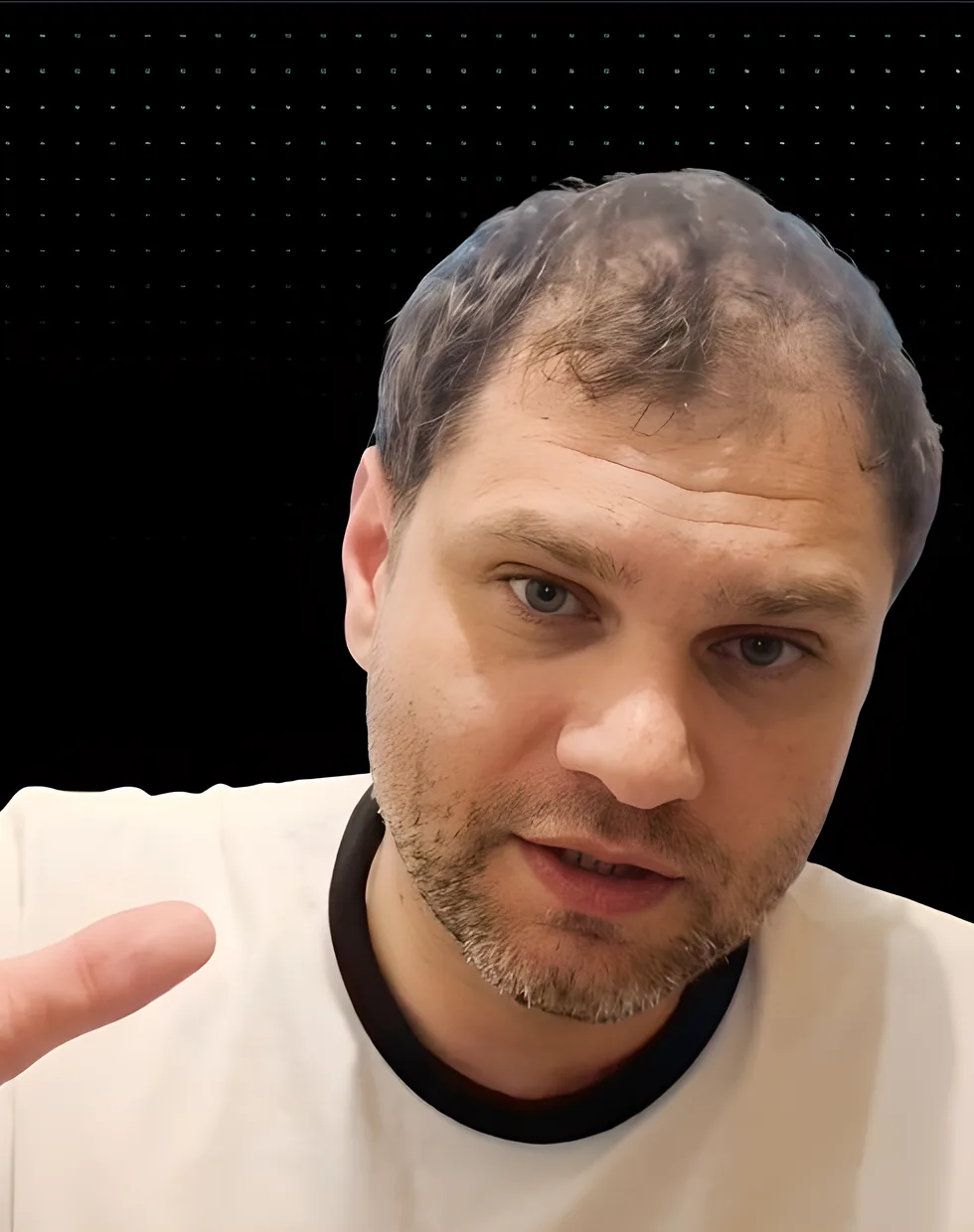
Who is Denis Kalyshkin?
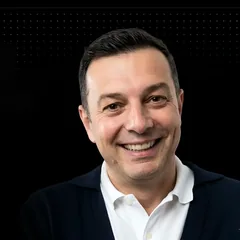
Denis Kalyshkin is a principal at I2BF Global Ventures, a fund that backs frontier tech for what he calls the boring industries: construction, manufacturing, logistics and utilities. He started out as an aerospace engineer and found he cared more about building businesses around technology than building it himself.
- 11,000+startups he has reviewed, in the host's introduction0:56
- 12+years at I2BF, which he joined as a young analyst0:00
- 2master's degrees, from the Moscow Institute of Physics and Technology0:43
- 2006
Starts as an aerospace engineer, at about 20
3:26 - Before VC
Works in a bank, on spreadsheets
4:40 - 2014
Joins I2BF, drawn by its investment in Planetary Resources, a company that planned to mine asteroids
4:24 - Alongside
Co-founds Space Ambition, a community for space tech founders
0:50 - Today
Principal at I2BF, hunting frontier tech for industry
0:32
What Do Investors Look for in Startups? Notes From a VC
What do investors look for in startups? Denis Kalyshkin, a principal at I2BF Global Ventures, has reviewed more than 11,000 startups in over 12 years. For founders raising from VCs, three things recur when he talks about what he backs: technology that fits the use case, a moat built on industry insight and traction that matches his fund's stage.
In the opening, host Niclas Schlopsna puts Denis's thesis at odds with the 2026 chase for pure AI plays. Denis, at a New York based fund with more than $400 million under management, hunts for frontier tech transforming what he calls the boring industries, among them construction, manufacturing, logistics and utilities.
What does a VC who reviewed 11,000 startups look for?
The most overused buzzword in 2026 pitch decks is AI, in Denis's words, and he puts a number on it: 75 percent of the founders raising funding claim to be an AI company.
His fund backs what he calls boring and unsexy industries, among them healthcare, construction and logistics. Three things recur in what he says about them:
- Technology that fits the use case. For an AI claim he wants to know whether it makes sense to use AI agents at all or whether it is just the buzzword.
- A moat from industry insight. He frames the question as what the secret sauce is, what the barrier to entry is and why the product isn't easy to replicate. In legacy industries, he says, the moats come from industry insights work.
- Traction at the fund's stage. He invests in startups that already have traction, a point he makes when asked for his biggest red flag.
How long do investors spend on a pitch deck?
Denis gets hundreds of decks a month, thousands a year. He gives the average reading time:
“The average time we see spent reading the pitch deck is about three minutes.”
With three minutes to work with, both the email and the pitch deck for investors have to tick the boxes: market size, competition and what the company does.
What are the red flags in an investor email or first meeting?
Two things put Denis off, one in his inbox and one in the first meeting.
Generic or irrelevant outreach. Founders wouldn't read many of the emails he gets themselves, he says, because they are generic, very long and hard to grasp fast, or irrelevant: he invests in manufacturing and gets emails about cancer treatment. One anonymous "dear sir or madam" email asked him for $20 billion, and when he posted it on LinkedIn it drew around 200,000 impressions.
Exaggerated results. When the email or deck overstates them, he knows after two or three minutes in the meeting that it's going nowhere, a waste of time more than a direct flag, he says. Such founders are about 18 months away from the traction he invests in.
- Step 1: The results look huge on paper
In the email conversation or the pitch deck, all the results are extremely exaggerated.
28:47 - Step 2: Two or three minutes in, he knows
In the meeting he understands it is not going anywhere.
28:56 - Step 3: The founders are not at his stage yet
He invests in startups that already have traction, and this conversation would make sense in 18 months.
29:14 - Step 4: Not a direct flag, a waste of time
He still listens and asks questions, but it doesn't make sense for the founders either.
29:17 - Step 5: Talk to VCs at your stage
There are VCs focused on your stage, and the chance of closing the deal is higher there.
29:32
Denis Kalyshkin on Deal Makers (& Fakers), 28:46 to 29:47
Vlad Sarca, a VC on another episode, lists uncoachable founders as a red flag and advises founders not to exaggerate traction.
The fix on the outreach side is a narrow list, and Denis lays it out in four moves.
- Step 1: Skip the mass mailing
For niche solutions in industrial or energy, filter down instead of sending to 8,000 VCs.
25:46 - Step 3: Look for a thin pipeline in your niche
Those VCs naturally don't have a tremendous pipeline in it.
26:00 - Step 4: Lead with your business background
A strong one puts you in the top 20 percent of their funnel, and they will see it's time for a conversation.
26:07
Denis Kalyshkin on Deal Makers (& Fakers), 25:39 to 26:20
What do investors look for in startups that sell to boring industries?
AI and IT companies are the biggest adopters of AI, Denis says, and they're tough to sell to.
Manufacturers, construction companies and farmers buy differently:
“They typically want to pay for turnkey solution, they don't want to build it themselves, so you end up having a more sticky product, higher LTVs.”
He adds that people who understand both the industry and how AI works are a combination he doesn't often meet in those industries. A founder who has both is probably quite unique, and competition can be less crazy than in the glamorous industries.
AI has also lowered the cost of building solutions, so more industries now have a case for digitalization and automation. Asked which industry is next, Denis names none: the fund looks broadly.
Is deep tech funding harder to get?
Deep tech startups struggle with fundraising, and host Niclas Schlopsna describes it from his own experience: deep tech investing needs a lot of money before the first sales, and fewer investors focus on it than on software.
The fund itself started as a clean tech and energy fund, widened to industrial applications and then added software to transform a wider spectrum of industries. A VC has to change with the narrative, Denis says. He accepts that deep tech funding is harder to raise, but says its share is growing.
In his view deep tech will keep growing because it isn't easy to build and gives a potential upside. AI needs data centers, which need technology, energy and a network. He sees more funds emerging in Europe that go after deep tech venture capital, though he wouldn't call it mainstream.
What do investors look for in startups founded by engineers and scientists?
The decks of deep tech startups tend to be built around the technology, because engineers or scientists write them, and fewer are built around the business. Denis's advice:
- Stress your business perspective and ideally add a business person to the team.
- Show a memorandum of understanding (MOU) if you have no sales yet. It helps you stand out.
- Look for the application on Earth. Space markets can be niche, non-existent or very tiny, and for a space company it could be 95 percent of revenue from Earth and 5 percent from space. One company applied launch cushioning technology built for astronauts to orthopedic mattresses.
Deep tech founder Nick Kanopoulos describes the founder's side: Greek VCs preferred soft technology like AI, and the stretch of building a factory was the hard part to fund.
How has venture capital changed since 2014?
When he started in venture capital in 2014, attention was so scarce that founders sneaked into the elevator and pitched their idea for 30 seconds on the way up. Since then, one of the venture capital trends has been bigger seed rounds, with VCs starting to require more revenue traction.
Another of the venture capital trends hits early-stage founders directly: the number of early-stage companies is falling, and he says it dropped about 30 percent over the last couple of years.
For seed founders, the top 10 percent find it easier to raise because big funds put a lot of capital into them, while the other 90 percent are in a much worse position.
Where do VCs get their money, and who are the LPs?
VCs get their money from LPs, the investors behind a fund. Denis, who has been involved in raising a VC fund, says raising from LPs is harder than raising for a startup.
“If you believe it's hard to raise funding for your startup, try to raise money for your VC.”
- Who you pitchA startup raising from VCs: A person in charge of deploying capital day and nightA VC raising from LPs: A wide spectrum of people and organizations who could be LPs
- How they come to the tableA startup raising from VCs: Their main job function is to talk to youA VC raising from LPs: They don't necessarily want to invest in a VC at all, so you need to persuade them
- How hard it isA startup raising from VCs: Hard, as many founders find itA VC raising from LPs: Harder, in his view
Denis Kalyshkin on Deal Makers (& Fakers), 19:44 to 20:43
The LPs Denis lists are high net worth individuals, family offices, funds of funds, development funds and sometimes military and special service units.
To an LP, he says, many funds look the same, because they see tens of thousands of them and the fund is asking for a decade-long commitment, so a differentiator is hard to find.
Some LPs are purely financial. Others mainly want to support a specific technology and treat returns as second, such as energy companies or technology that's strategically wanted in Germany.
In Europe, Denis says, the main LPs in venture capital are government funding, which sometimes asks for strategic technologies such as quantum computing. Some pressure on the LP side pushes the same way, and while he would not call it a majority, he sees more interest in alternatives to pure software.
What do investors look for in startups, and what should a founder do next?
Before sending anything, check it against what Denis says:
- The fund invests at your stage. He can tell within two or three minutes of a meeting that a founder is 18 months early.
- The email and the pitch deck for investors tick market size, competition and what you do, and they get read in about three minutes.
- If the deck says AI, it shows why AI makes sense for the use case.
- The investor list is narrow, in his example 200 VCs out of 8,000. A step-by-step guide to investor outreach covers how to build one.
- Deep tech decks lead with the business: add a business person, show an MOU if there are no sales and name an application on Earth.
Denis closes with a reminder for founders: getting the funding is not the finish line, it is the start. What matters most, he says, is what you do with the funding so that the company succeeds.
Asked and answered.
6 questions this conversation answers, in plain words.
Three things recur in what Denis Kalyshkin of I2BF Global Ventures says: technology that makes sense for the use case, a moat that comes from industry insight, and traction that matches the fund's stage. He also calls AI the most overused buzzword in decks, and says 75 percent of founders raising funding claim to be an AI company.
About three minutes on average, going by the deck-reading statistics Denis cites. He gets hundreds of decks a month, so both the email and the pitch deck for investors have to tick the boxes on market size, competition and what the company does.
Exaggerated results. Denis says that when an email or deck overstates them, he understands within two or three minutes of the meeting that the startup is earlier than the traction his fund invests in, so the conversation would make sense in 18 months.
In Denis's description, LPs are the people and organizations that invest in a VC fund. They don't necessarily want to invest in a VC fund at all, and they scrutinize their decisions as professional financial people.
From LPs. Denis lists high net worth individuals, family offices, funds of funds and development funds, and sometimes military and special service units. Some LPs are purely financial. Others mainly want to support a specific technology and treat returns as second, and in Europe the main LPs of VCs are government funding that can ask for strategic technologies such as quantum computing.
The host says, from his own experience, that it takes a lot of money before the first sales and fewer investors focus on it than on software. Denis agrees it is harder to raise, but still expects deep tech to keep growing, because AI needs data centers, energy and networks, and he sees more funds in deep tech venture capital emerging in Europe.
Follow Denis, or keep listening.
Four ways to keep going once the episode ends.
- The fundSee what I2BF Global Ventures backs
Check the fund's own site before you send anything, the way Denis advises matching the investor to your stage and niche.
Visit I2BF Global Ventures - The guestFollow Denis on LinkedIn
Denis is a principal at I2BF Global Ventures, a New York based fund that backs frontier tech for industry.
Open his LinkedIn profile - Keep listeningAnother VC on red flags
Vlad Sarca lists uncoachable founders as a red flag and tells founders not to exaggerate traction.
Read the Vlad Sarca episode - The showFollow Deal Makers (& Fakers)
New episodes with founders and investors on how deals really get done.
Follow on Spotify