Armon Sharei: $400M for Biotech, an MIT PhD and the Roche Deal
Key points: Said at the table.
Who is Armon Sharei?
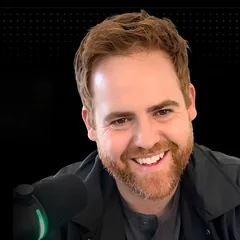
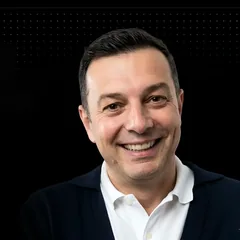
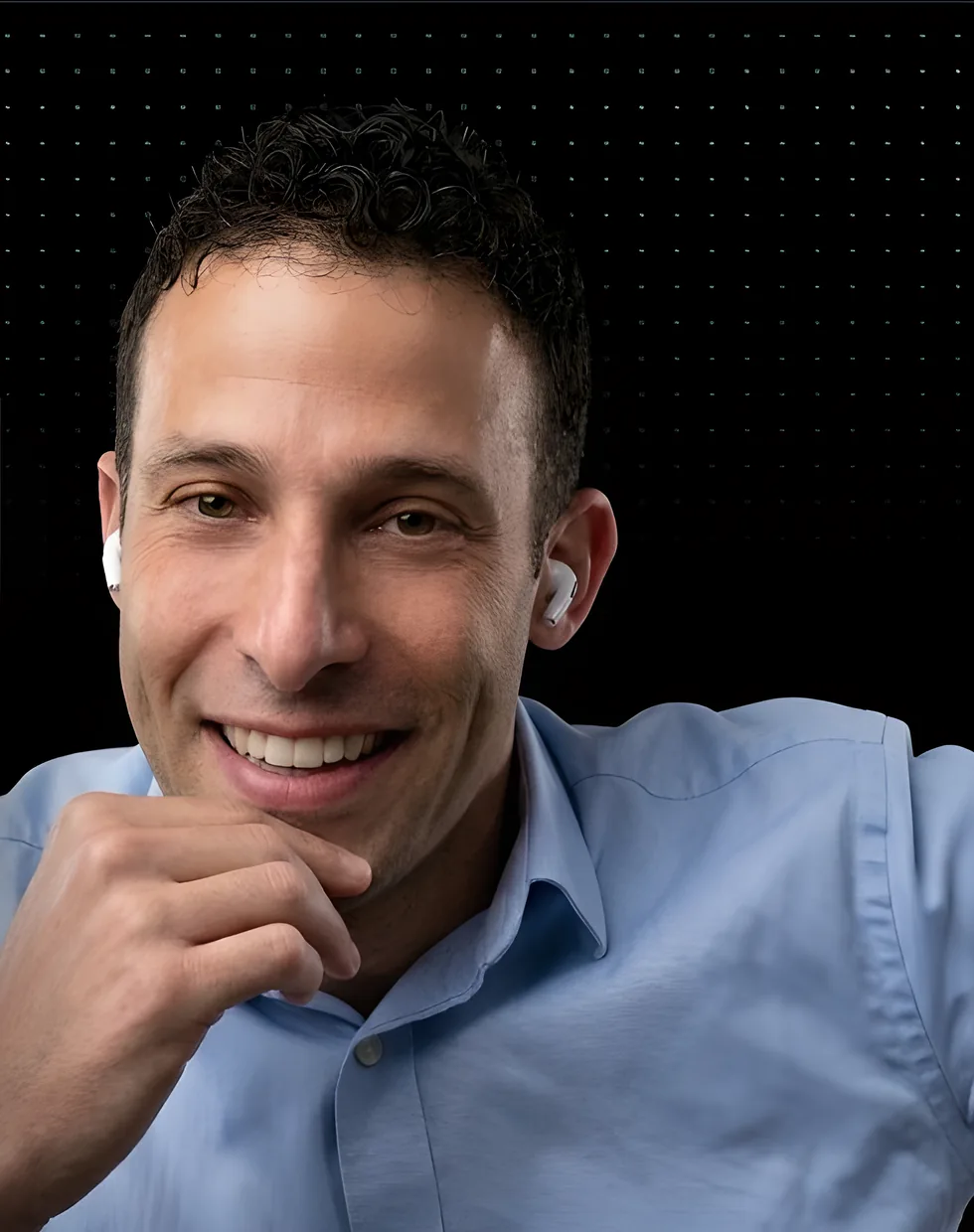
Armon Sharei is the founder of Portal Biotechnologies, a platform company that sells systems and consumables, and the former CEO of Squeeze Biotech (SQZ), which he took public in 2020 before leaving the CEO seat. A chemical engineer by training, he studied at Stanford, earned a PhD at MIT under Robert Langer and built both companies on the science of squeezing cells to deliver material into them.
- 100+clients at Portal, in the host's introduction0:43
- 9 of 10of the top 10 pharma companies are among them, in the host's introduction0:49
- 10years of Squeeze, as he counts them28:55
- Childhood
Grows up between California, Iran and Dubai
1:50 - Student
Studies chemical engineering at Stanford, then a PhD at MIT under Robert Langer
0:22 - 2014
Closes the first round at Squeeze, an angel round
15:45 - 2020
Takes Squeeze public
22:18 - Today
Runs Portal Biotechnologies, which sells systems and consumables
30:10
Why Do Companies Go Public? A Biotech Founder's View
Why do companies go public? Armon Sharei took Squeeze Biotech (SQZ) public in 2020, lost the CEO seat afterwards and now runs Portal Biotechnologies. Asked about a listing for Portal, he says he liked public more than private: public markets have real consequences for exaggerating, the pool of capital is gigantic and transactions are faster.
If your company burns cash for years and you're weighing a listing against more private rounds, he puts figures on both routes and tells what happened to him after the listing. Squeeze used a mechanism of squeezing cells to deliver material into them; at Portal he supplies technology to others and sells the systems and consumables.
Why do companies go public?
The host asks whether he would consider an IPO for Portal, the company he runs now. He doesn't say whether Portal will list, but about the first time he is clear:
“I actually liked public more than private. I know most people wouldn't say that, but I actually liked it more despite what happened.”
The advantages of going public, as he lists them, are that the rules are real and carry consequences for exaggerating, that the pool of capital is gigantic compared to the private side, and that transactions are faster and more efficient, by far.
His example for the rules: on the private side competitors could exaggerate, and investors asked him about claims he thought were lies. Once those competitors were public, they stopped saying them, which to him suggested the claims weren't true.
Public vs private funding: how do the two routes compare?
On public vs private funding, Armon compares the two routes in general terms. What follows is his view from his own experience, not statistics.
- Speed of the next raisePrivate: A long drawn out process of six to 12 months, with lots of negotiations and silly little nuancesPublic: A super quick, streamlined and mechanized process, whether 50 million or 5 billion; a transaction can happen overnight
- Pool of capitalPrivate: Smaller than the public poolPublic: Gigantic compared to the private side
- Rules on what is saidPrivate: A lot easier to get away with exaggeratingPublic: The rules are real, with real consequences for exaggerated claims
Armon Sharei on Deal Makers (& Fakers), 26:52 to 28:18
The totals behind Squeeze's own story are from rough recall. On the private side he is not sure of the total: a little over 170 million, or 150-ish. Squeeze took about 140 million through the IPO and the follow-ons, the later share sales of a listed company.
Those totals do not show a gap in size: about 140 million raised publicly, 150-ish to a little over 170 million privately. The difference he stresses is speed, since once a company is public a transaction can happen overnight.
What are the disadvantages of going public?
Armon does not lay out the pros and cons of going public as a list. The reason people normally don't like it, he says, is the rules: there are a lot of them. He liked them anyway.
Armon describes the COVID years as a biotech IPO wave: biotech had gone to the moon and many people IPO'd, his company included.
After the listing, Squeeze had three clinical trials going at its peak, about 150 people and, by his estimate, a burn rate (the cash a company spends each year) of 70 to 80 million a year. Then biotech financing got hard, and the biotechs that had gone public in the COVID years went through what he calls the hangover phase: stocks crashing, no one doing well, everyone under pressure.
For a founder weighing a listing now, the market is not the one Squeeze listed into. Asked whether biotech is picking up again, Armon says it is getting better: after 2021 and 2022 it went through a terrible nuclear winter and seems to be coming back.
Should a platform biotech focus on one lead indication?
At Squeeze, the debate was what to do once biotech financing got hard. The normal playbook for a biotech with an asset in clinical trials has two branches:
- The data looks good: more money comes in, or pharma buys the company, or both.
- The data doesn't: the company shuts down, which he calls a respectable failure, and moves on to the next thing.
The board pushed for that because it's what people typically do: a focus on one lead clinical indication, the disease it develops its first treatment for.
Armon was very opposed. Squeeze's technology can do many, many things, and for a platform technology like that, he says, you will functionally live and die by the first trial you do. It doesn't matter if it could have helped the next 99 clinical indications: if the first one didn't work, you're screwed.
Can a founder be fired after an IPO?
“So they kicked me out, even though it says resign.”
The listing Armon liked also ended his time as CEO, which is the other side of asking why do companies go public. In the host's summary of what happened after the IPO, the stock came under pressure, the board announced a new strategic prioritization and Armon stepped down as CEO. In Armon's version the announcement says resign, but he was out because he opposed the board's lead indication focus.
The board's reasoning, as he tells it: even if they ordered him to focus on one indication, he would sneak in other things and secretly keep stuff alive, because he had a history of doing that. So the board wasn't wrong about that part, and he couldn't be around if they did it this way.
What followed, in his account:
- The board: nine of its 10 members weren't investors. The one investor on it was more on his side, and the board was split.
- The stock: it crashed about 70 percent on the day of the news, in his recollection, because investors got mad. Investors cared about the platform side.
- Roche: the pharma company that had done big deals with Squeeze was upset because the board had eliminated the platform side and the people it worked with.
From there he knew Squeeze was in kind of a death spiral, probably.
How did a biotech get from $100,000 to an IPO, and why do companies go public by then?
Armon says the founders wrote a terrible business plan and thought they needed only $100,000 to get going. Here is the path from there to the IPO, in the order he tells it; the paragraphs after it fill in the Roche story behind the middle steps.
- Step 1: Professors and parents
The founders thought they needed only $100,000 to get going. Each of the two professors and his parents put in $30,000.
8:40 - Step 2: Grants
A lot of grant money was already behind the project, including an NIH R01; by his recollection a few million.
10:14 - Step 3: Angel round, 2014
A 1 million seed round. One angel brought them to two angel groups, which led to a third.
15:45 - Step 6: Series C, then the IPO
In 2018 Roche came back with a much bigger deal. In 2020 the company decided to go public.
21:42
Armon Sharei on Deal Makers (& Fakers), 8:40 to 22:17
After the seed round, Roche and Pfizer became interested, because cell therapies had become a big thing. Most pharma companies saw Squeeze as a tool for their own programs. Roche was the only one that asked what they'd do with it and meant it, and Armon answered with cancer vaccine mechanisms.
One of the VCs getting close was Polaris, and it knew Roche was very interested. The 5 million Series A in 2015 (the first venture round after seed funding), led by Polaris, came from an intersection of three things:
- The technology: the VCs liked it.
- The founders: they liked them too, though Squeeze was viewed as a bunch of children.
- The validation: Roche was sniffing around.
After the 2015 Series A, Roche did its first big deal with Squeeze that year, a pharma partnership that suddenly made everyone pay attention. People who hadn't answered before said they were sorry they had missed his fifth email. He voices the reaction to Roche's bet:
“Roche, the big, smart, conservative pharma, decided to bet on these children and their cartoons, they must be doing something right.”
With the Roche validation, Squeeze then did a 24 million Series B. In 2018 it did a Series C, and Roche came back with a much bigger deal, a re-up (a renewed deal on a larger scale) that helped validate to the investors that things looked good.
Armon Sharei and host Niclas Schlopsna on Deal Makers (& Fakers), 15:38 to 21:38
What drove the decision to list? Armon does not say what drove Squeeze's decision, only that they decided to go public in 2020.
Andy Goldstein, partner at VU Venture Partners, explains how a fund like Andreessen Horowitz can stay in a company all the way through to an IPO, starting with a 50K or 100K ticket, while European funds tend to be more siloed by stage.
How did a first-time founder set a seed round valuation?
Armon's seed round valuation was set in a sentence. An angel who was excited to get in asked what valuation they were thinking, and he and his friend hadn't talked about it. One of them said "four million pre" (the company's value before the new money goes in), he forgets which, the angel said OK, and Armon walked out thinking: I guess that's our price now.
They had no idea what a good price was. What convinced the angels, by his account:
- Initial customers. Some people at Harvard and MIT were using the product, and some companies were interested in chatting.
- Recognition. A big paper had come out in PNAS, and Scientific American named Squeeze one of the top 10 world changing ideas, in the same article as CRISPR.
- His PhD adviser's reputation. Bob Langer, his PhD adviser, had a big reputation in the startup world, so people took comfort that one of his students was coming out and doing things.
Early on, he says, these investments are a little bit of an impulse buy. In the end, for angels it comes down to whether they like you or not. The host adds that these people go on your cap table (the list of who owns the company) and will have an influence on your company.
Deep tech founder Nick Kanopoulos tells how he defended his valuation with comparable European deals: it was the low point of his raise, and he answered it with a slide of comparable deals and their deal to revenue ratio.
For how pre-money valuation works and which methods fit which stage, spectup's startup valuation guide goes through them.
What should founders look for in biotech investors?
Asked for the biggest red flag in a biotech investor, Armon says many of them will just chase a trend. Right now anti-obesity drugs are popular, and the same investors would have said no before Novo Nordisk had its big moments. The moment it became hot they all loved it, and he bets they'll forget about it again in a year or two.
He advises being clear-eyed about the herd mentality, even though many of them pretend they don't do herd things.
His second point is about brand name against the individual's actual thesis on the company. Squeeze let in some brand-name investors because it sounded great to have the names, but when the next speed bump came they didn't care or wouldn't do anything to help. Other investors were less well known and tried hard, because they believed in what the company was doing.
“Always better to work with people that share the vision and the commitment, even if they're not necessarily the biggest name, as opposed to go for a name that's only a superficial conviction.”
For a founder asking "why do companies go public?", Armon's account is one inside view: he liked the rules, the capital and the speed, and the board still removed him over strategy. In an investor he wants shared vision and commitment over a big name.
Asked and answered.
4 questions this conversation answers, in plain words.
On the pros and cons of going public, Armon Sharei says he liked public more than private. The advantages of going public, for him, were the real rules, the gigantic pool of capital and faster transactions. He liked it despite what happened: the stock came under pressure and the board removed him over strategy.
Armon Sharei says it is, by far, drawing on his own biotech IPO. On the private side, in his experience, a raise is a long drawn out process of six to 12 months. Once a company is public, the next raise, whether 50 million or 5 billion, is a super quick process, and he says a transaction can happen overnight.
Armon's company ran three clinical trials at its peak, with about 150 people and, by his estimate, a burn rate of 70 to 80 million a year. Then the stock came under pressure and the board pushed the standard biotech playbook of focusing on the lead clinical indication. He opposed it, left the CEO seat and says the stock crashed about 70 percent on the day of the news.
It happened to Armon. The announcement said he resigned, and in his words the board kicked him out because he opposed a single lead indication. He tells his own case only.
Follow Portal, or keep listening.
The episode ends without a call to action, so these are three ways to go on from here.
- The guest's companySee what Portal Biotechnologies does
Armon now runs Portal, which supplies technology to others and sells the systems and consumables.
Visit Portal Biotechnologies - Another episodeHow a fund can stay in a company through to an IPO
Andy Goldstein, partner at VU Venture Partners, explains how a fund like Andreessen Horowitz can follow a company from a small first ticket all the way to a listing.
Listen to Andy Goldstein - The showFollow Deal Makers (& Fakers)
A new conversation with a founder or investor, so you do not miss the next deal story.
Follow on Spotify