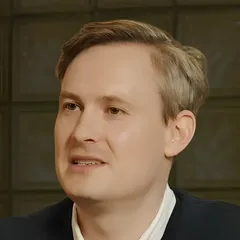
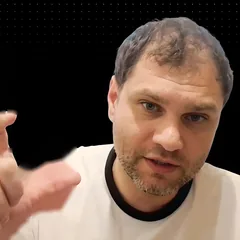
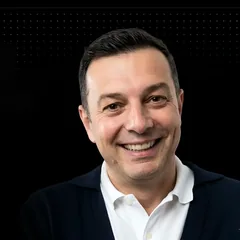
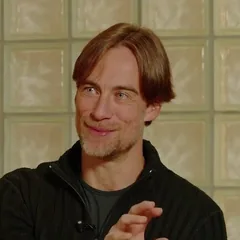
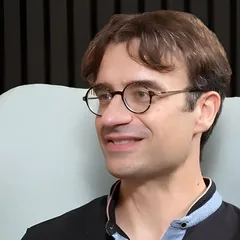
Andy Goldstein: How to Spot Unicorns in 2026
Key points: Said at the table.
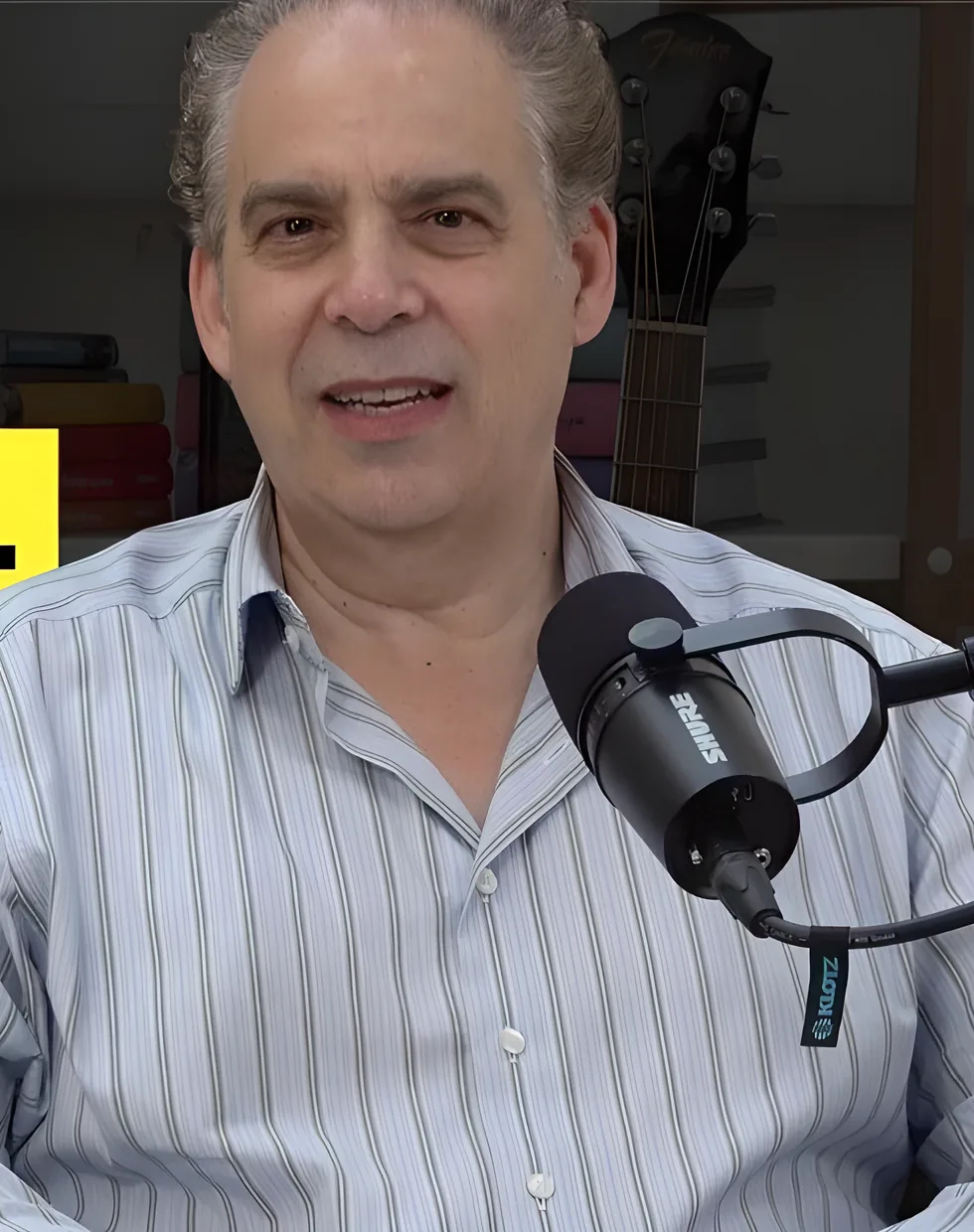
Who is Andy Goldstein?
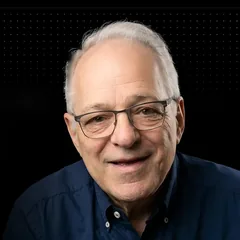
Andy Goldstein is a partner at Venture University, an education programme for investors, and at VU Venture Partners, the fund it runs inside, in Munich. Born in Philadelphia, he moved to Europe in 1983 to sell licensed US software, sold his second company in 2003 and then ran the LMU Entrepreneurship Center for 16 years.
- 40+years in Germany, by his own count29:06
- 16years running the LMU Entrepreneurship Center5:15
- 1,000+Venture University alumni, he says43:19
- 1983
Moves to Vienna to take licensed US software to Europe, and later settles in Munich
9:27 - 1997
Starts a second company, Media Gold, and sells it to a French public company in 2003
10:39 - After the sale
Runs the LMU Entrepreneurship Center for 16 years and co-founds the German Accelerator
5:15 - Today
Builds Venture University and is a partner at VU Venture Partners
32:47
How to Invest in Startups: Three Tests From a VC Partner
How to invest in startups comes down to three tests for the company and one for yourself, according to Andy Goldstein, a partner at VU Venture Partners. The company tests are how much better the product is, how big the market is and what gets it into the market. The test for yourself is whether you can stay in.
In his interview with host Niclas Schlopsna, Andy draws on 55 angel investments, 16 years of running the LMU Entrepreneurship Center and a year inside a venture fund. His advice on how to start investing in startups is for people who invest their own capital (post-exit founders, family offices, angels) and for people trying to break into VC.
Andy is also a partner at Venture University, an education programme for investors that runs inside VU Venture Partners; its members pay tuition.
How do you find startups to invest in?
Deal flow does not have to come from networking, Andy says. He is a strong believer in serendipity, though, and networking is where it happens: a phone chat on the morning of the recording, about when to go swimming next, ended with him offering to connect a contact with a CIO.
He wants a community in which startups, post-exit entrepreneurs, family offices and people breaking into investing come together regularly, so that serendipity can happen.
After selling his company, Vlad Sarca had to work out how to find startups to invest in. He explains how he built deal flow: more time for deals, a course in venture capital and angel investing, and angel associations.
What should you check before you invest in a startup?
Before his fund says yes, it asks three questions, Andy says. The first, in his words:
“How large is the magnitude of improvement to the status quo? Every problem is being solved at the moment. The question is, is this solution to the problem two times better, four times better, 10 times better, or 1,000 times better?”
- Step 1: Improvement over the status quo
Two, four, 10 or 1,000 times better? His fund looks for 100 times better. Uber, he says, was a complete transformation of the way you moved.
37:13 - Step 2: Market size
The market has to be big enough that a company which transforms it becomes hugely valuable.
38:20 - Step 3: Marketing hack
His term for the unfair entry advantage, and in his words the most important to understand. Venmo's, when one of the fund's general partners wrote its first $250K check among probably 100 payment transfer companies, was being the first to say that all you need to send money is a mobile phone number.
39:22
Andy Goldstein on Deal Makers (& Fakers), 37:13 to 41:14
The fund's latest investment, which Andy does not name, is a healthcare company that uses AI to identify which eggs are more likely to succeed in the in vitro process. As his market-size illustration, he says a 1% to 2% improvement in those results is enough to make a company a unicorn, a startup valued at a billion dollars or more.
Its marketing hack is that the largest network of in vitro clinics worldwide is an investor and has committed to roll it out across its network if it goes well.
Top-down market calculations often conclude a market of over one billion, which is just not true, Andy and the host agree; Andy adds that sometimes the founder's calculation is right.
How to invest in AI startups: test the AI-first claim
Software companies keep telling Andy they are AI-first, and very few are, he says. His test for the claim: the founder shows an investor the levels of the company, from people to technology, with AI on every one, and then, in his words, "you become believable."
How do you recognise a founder worth backing?
For anyone working out how to invest in early stage startups, the early stage is about the burning entrepreneur, Andy says; the later stage is about traction and execution.
There is no formula: "I want to be blown away by the founders that I invest in." What he looks for shows in the eyes:
“You look in their eyes and they are burning on fire for it. And you know that they're simply not going to stop until they make it work.”
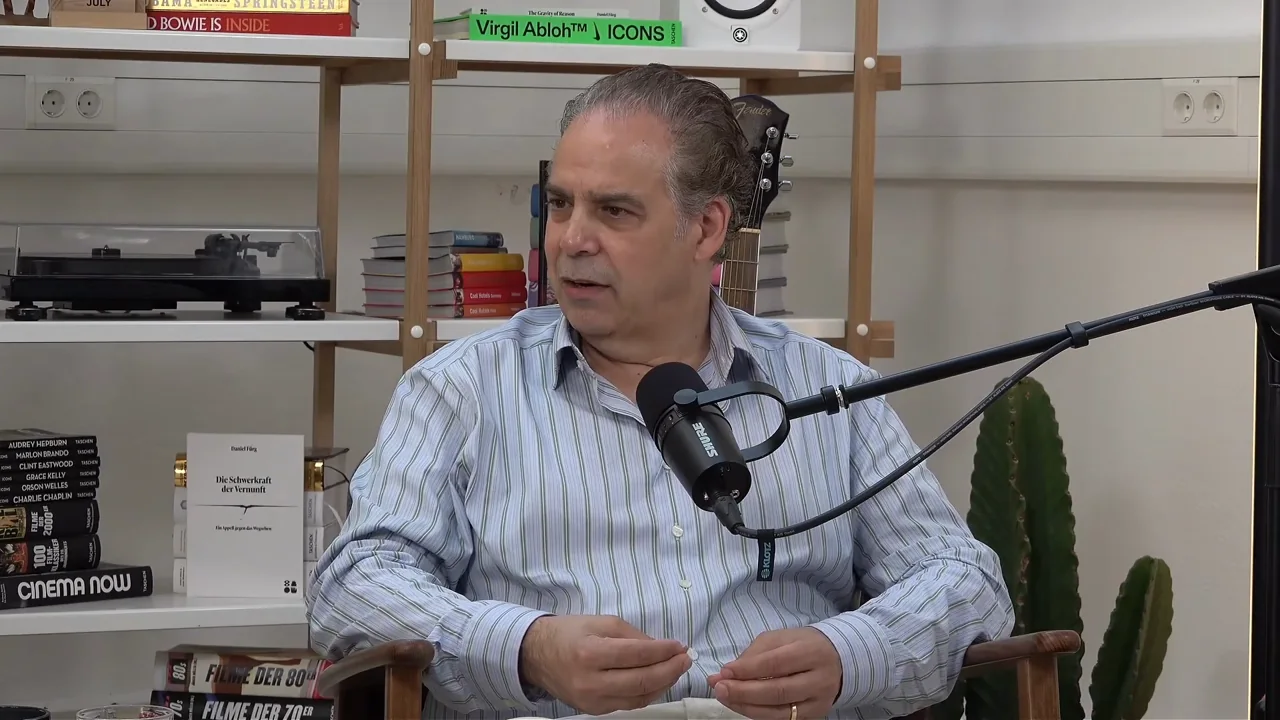
That energy is no guarantee: he has invested in lots of companies whose founders he thought had it and which are not here anymore. Beyond energy, he wants clarity on why and how they are doing it and depth in the team.
He does not weigh experience much. In the early stage it is often exactly what you don't want, because people who know how an industry works are rarely the ones who upend it.
Andy, who co-founded the German Accelerator and ran the LMU Entrepreneurship Center, remembers the FlixBus founders walking into his office: he told them they were in PowerPoint mode and it was all theory. They agreed, and he said "You're in. Let's give it a shot."
Before any meeting, the deck has to hold up: Denis Kalyshkin of I2BF Global Ventures says the average pitch deck is read for about three minutes.
Does the stage change how to invest in startups?
Not much, in Andy's view. Good US funds, he says, are much more stage agnostic: Andreessen Horowitz will put 50K or 100K into an early company and can stay in all the way to an IPO.
European funds, he says, tend to be siloed: "we only do A rounds or we only do C", and they pass when the valuation is too high or they cannot get a certain share of the company.
He is not impressed by that thinking and prefers value thinking: he would rather put a couple of million into a company valued at 2 billion that he thinks is very likely to reach 30 or 100 billion than into one valued at 2 million.
- The ruleStage thinking: "We only do A rounds or we only do C"Value thinking: Understand a company where it is when you meet it, and decide regardless of its stage
- A high valuationStage thinking: Pass if the valuation is too high or they cannot get a certain percentage of the companyValue thinking: A couple of million into a company valued at 2 billion that he thinks is very likely to reach 30 or 100 billion, rather than into one valued at 2 million
- Where he sees itStage thinking: European funds, which he says tend to be much more siloedValue thinking: Good US funds, much more stage agnostic: Andreessen Horowitz can put in 50K or 100K early and stay in to an IPO
Andy Goldstein on Deal Makers (& Fakers), 21:43 to 23:14
He blames the investor base: of his own large portfolio, Andy says he does not have "a single startup that's gotten past their B round without getting money from outside Europe".
Two changes would help venture, especially in Germany, in his view: letting pension funds and insurance companies invest in the asset class, ideally 2% of their capital, and strong tax incentives for private angel investing like France has.
Is it too late to invest in a unicorn?
No, in Andy's view: the idea of being too late is only a question of return. "Too late compared to what?"
He did not invest in FlixBus or Trade Republic, which started in his entrepreneurship center, because he had no fund then. By the time he had exits and angel funds he thought he was too late, because the valuations looked super high.
He says he does not know what the numbers were; if you invested at 100 or 200 million, any of those companies was an incredible deal.
Asked whether it is too late to buy SpaceX shares, he says no, and adds that he holds them through VU, where they are in lockup. Space is at the very beginning, in his view, and SpaceX has built an entire industry.
The condition is time: for an investment like that you have to plan on five or ten years.
How much of your capital should go into venture capital?
For a family office, Andy puts it at 2% to 5% of capital. For a person working out how to invest in startups, he uses 2% of net worth as his example of a loss you survive.
“If you put in 2% of your net worth and you lose it, you still have 98%. But it's the only 2% that might turn out to be 50% of your net worth in five years.”
He adds a caveat: venture is the one asset class that, done right, consistently returns 20x and 200x on individual investments, he says, but venture capital returns as an asset class are not performing that way, and "we have to ask ourselves why."
For comparison, Martin Janicki says a chart of European family office asset allocation showed roughly a quarter in private equity and between one and two percent in venture.
What mistakes do new angel investors make?
Anyone asking how to start angel investing can learn from Andy's record: he made 55 angel investments and set up two angel funds starting in 2016. On paper they looked great, but he had trouble exiting. His exits by year:
- 2021: one, "a nice exit"
- 2022 to 2024: none
- 2025, the year of his four quarters at Venture University: six
- 2026, at the time of recording: two so far
He gives only the number of exits, with no size or return.
The change started with a year inside a VC fund as a member, listening in partner meetings to general partners with 20 and 30 years of experience. It showed him, he says, that he had not been managing his portfolio in a way that helped companies exit.
He also says: "A lot of the companies I invested in I never would have invested in if I had done Venture University first because they didn't fit the criteria of a VC investment from the beginning. And I could have known that."
A second mistake is geographic. Andy says "fishing in your own pond" is probably a big mistake angels make: he invested only in German companies. "Nothing wrong with that," he says, "but there's a lot of companies broader."
How do you learn how to invest in startups before writing big checks?
Andy says venture capital is "broken from a learning perspective", which is part of the reason Venture University exists. On venture capital returns, he says, less than 25% of all funds across the planet ever return more than "one times the money", which means giving investors back more than they put in. He gives no source on air.
For anyone without a track record, his answer on how to invest in venture capital is the programme he runs, and it is learning by doing. At Venture University, he says, members pay tuition and are full venture partners from the first day: they run venture capital due diligence on real deals and take them to the investment committee, where they have a vote.
The programme takes post-exit founders, family offices and people with no track record.
He compares the programme with tennis: reading about it is one thing, hitting the ball is another. "You don't have a racket in your hand. You have a checkbook," he says, because a deal that wins the committee's vote gets money from the fund and its syndicate of investors.
Each member is given 100 deals to look at, he says, and a startup founder in the programme has to say no to 90 of them, because they are "definitely not VC cases".
The time it takes, he says, is a couple of hours a week over the year.
Why does staying power matter in venture capital?
Andy ends his answer on being too late with one point: venture is about staying power.
“It's not that it's too late to invest. It's that are you going to be able to stay in?”
From his own angel investments he learned that when you can't put in more money and something goes wrong, you end up at the bottom of the waterfall: the latest money is paid back first, so the early investors come last.
A liquidation preference can sharpen it when a company is in real trouble. If a new investor puts in a million dollars on the condition that the first three million out go to him, a sale for three million leaves the early investors with nothing.
His advice on how to invest in startups ends there too: understand how far the company can transform its market, do not fall in love with the idea, look for people who are totally committed, and understand the size of the market and the company's ability to break into it. Then, he says, "once you're in, stay in. Go in early, stay late."
Asked and answered.
6 questions this conversation answers, in plain words.
Andy Goldstein does not address retail investors directly. On how to invest in startups as a person, he uses 2% of net worth as the example of a loss you can survive, and he says it makes sense for a family office to put 2% to 5% of its capital into venture. His own paid programme, which he presents as a way to learn how to invest in venture capital, takes post-exit founders, family offices and people with no track record.
Andy's numbers are about money. Less than 25% of venture capital funds ever return more than one times the money, he says, and for friends-and-family money a founder should say there is a high 90% chance it never comes back. He gives no startup failure rate on air.
There are many ways, Andy says, and deal flow does not have to come from networking, though he likes how serendipity happens when you enjoy meeting people. For anyone working out how to start angel investing, his programme puts volume first: each member is given 100 deals to look at, and a startup founder in it has to say no to 90.
Five to ten years for a company like SpaceX, in Andy's view, and at least five for bitcoin. An investor who can't put in more money when something goes wrong ends up at the bottom of the waterfall, last to be paid back.
Only if they can afford to lose it, Andy says. A founder should tell them there is a high 90% chance they never see the money again, and anyone who needs it back shouldn't invest. The founder also has to be comfortable with them losing it: his first company took 14 years to pay back its friends-and-family investors, two to one.
A term in a deal that pays a later investor before the earlier ones. In Andy's example, from a company in trouble, someone invests a million dollars on the condition that the first three million out go to him, so a sale for three million leaves the early investors with nothing, however much they put in earlier.
Talk to Venture University, or keep listening.
Four ways to keep going once the episode ends.
- The guestReach out to Andy on LinkedIn
The host says the details on Venture University and VU Venture Partners go in the podcast description, and tells listeners to reach out to Andy on LinkedIn.
Said at 47:47Open his LinkedIn profile - For people in their 20s and 30sAsk about the Venture University fellowship
Andy says Venture University is putting together a merit-based fellowship for people in their early 20s to their 30s for whom the cost is an issue, and hopes the best and brightest will reach out. Where people can afford the programme, he says, their tuition is matched with scholarships.
Said at 58:13Visit Venture University - Related episodeHear Vlad Sarca on building deal flow
After selling his company, Vlad Sarca worked out how to find startups to invest in, from a course in venture capital and angel investing to angel associations.
Listen to the episode - The showFollow Deal Makers (& Fakers)
New episodes with founders and investors.
Follow on Spotify